









What's Happening?
Law enforcement agencies are increasingly integrating biometric tools, such as facial recognition, fingerprinting, palm prints, iris scans, and voice recognition, into their operations to streamline investigations and improve identification accuracy.
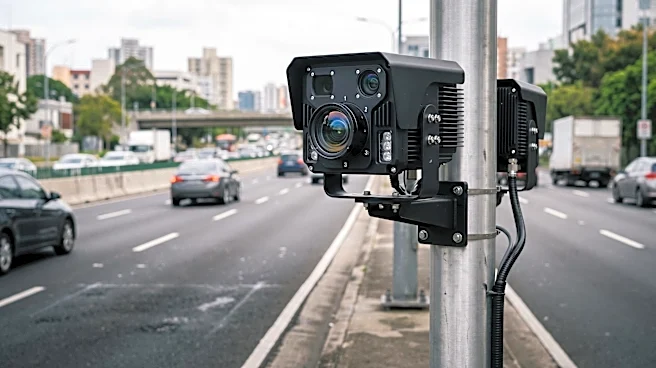
The FBI expanded its biometric capabilities in 2014 beyond fingerprints to include other unique identifiers, and the U.S. Department of Homeland Security utilizes Facial Recognition Tracking (FRT) to identify persons of interest by comparing mugshot databases with live video feeds. While these tools offer significant benefits in quickly identifying individuals and aiding investigations, they also present substantial legal and ethical concerns. Issues include potential infringements on individual privacy rights, the risk of misidentification, and the legal ambiguity surrounding warrants for biometric data on personal devices, particularly under the Fourth and Fifth Amendments.
Why It's Important?
The expanding use of biometrics by U.S. law enforcement has profound implications for civil liberties and the justice system. While these technologies can enhance public safety by accelerating investigations and improving identification, they also pose risks to individual privacy and due process. The potential for misidentification, as highlighted by instances where innocent individuals were wrongly accused, underscores the need for rigorous accuracy testing and human oversight. The debate over accessing biometric data on personal devices, with conflicting court rulings, creates legal uncertainty for both law enforcement and citizens. State-level initiatives, like Illinois's Biometric Information Privacy Act (BIPA) and Portland's ban on FRT in public places, reflect growing public and legislative concern over unchecked biometric surveillance. Balancing effective law enforcement with constitutional rights remains a critical challenge in the U.S.
What's Next?
The legal and ethical landscape surrounding biometric tools in law enforcement is expected to evolve rapidly. The U.S. Supreme Court may eventually rule on the legality of obtaining biometric password data from personal devices, providing much-needed clarity. States will likely continue to enact or strengthen legislation to regulate biometric data collection and usage, potentially leading to a patchwork of laws across the country. Law enforcement agencies will face increasing pressure to implement strict protocols for data handling, retention, and auditing to ensure accountability and minimize errors. Public discourse and advocacy groups will continue to push for greater transparency and oversight regarding biometric surveillance. The ongoing development of more sophisticated biometric technologies will also necessitate continuous evaluation of their societal impact and the establishment of clear ethical guidelines for their deployment.
Beyond the Headlines
The integration of biometrics into law enforcement operations touches upon deeper societal questions about surveillance, trust in government, and the definition of privacy in a technologically advanced world. The ability to identify individuals through gait patterns or voice recognition, often without their explicit knowledge or consent, blurs the lines of what constitutes a 'reasonable expectation of privacy' under the Fourth Amendment. The permanence of biometric data means that once collected, it can be retained and potentially misused for purposes beyond its original intent, creating a digital footprint that cannot be erased. This raises concerns about the potential for a surveillance state and the erosion of civil liberties. The challenge lies not only in regulating the technology itself but also in fostering public trust and ensuring that these powerful tools are used judiciously, transparently, and with robust safeguards against abuse, while upholding the foundational principles of a democratic society.