





What's Happening?
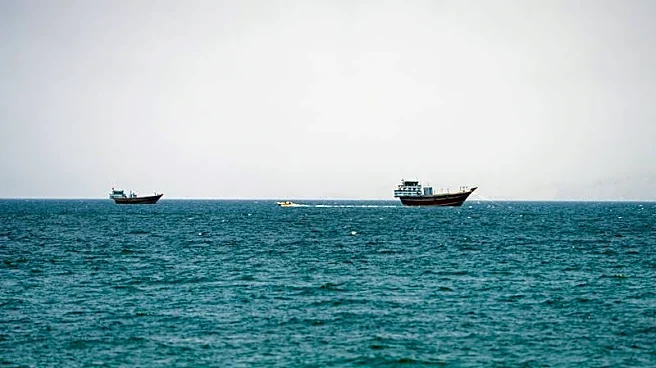
Diplomatic efforts to resolve the crisis surrounding the Strait of Hormuz have reportedly made progress, although no final agreement has been reached. Iran has proposed a temporary arrangement with Oman to reopen the strait, allowing one direction of traffic
through Iranian waters. However, Iran has rejected Oman's proposal for joint management, citing security concerns. The ongoing negotiations focus on establishing a central shipping route through the strait, with the aim of cooling tensions and paving the way for more comprehensive talks. The situation remains complex, with various geopolitical interests at play.
Why It's Important?
The Strait of Hormuz is a vital artery for global oil and gas shipments, and its stability is crucial for international energy markets. The progress in talks, although tentative, signals a potential easing of tensions that could stabilize global oil prices and reduce the risk of military conflict. However, the rejection of joint management by Iran highlights the challenges in achieving a lasting resolution. The situation underscores the importance of diplomatic engagement in addressing regional security issues and the potential impact on global economic stability.
What's Next?
Further negotiations are expected as diplomats work towards a temporary solution for shipping through the strait. The involvement of regional and international stakeholders will be critical in shaping the outcome. The potential for a temporary agreement could serve as a stepping stone for more comprehensive talks, but the risk of escalation remains if diplomatic efforts falter. The international community will be closely monitoring developments, as the outcome could have significant implications for regional security and global trade.