









What's Happening?
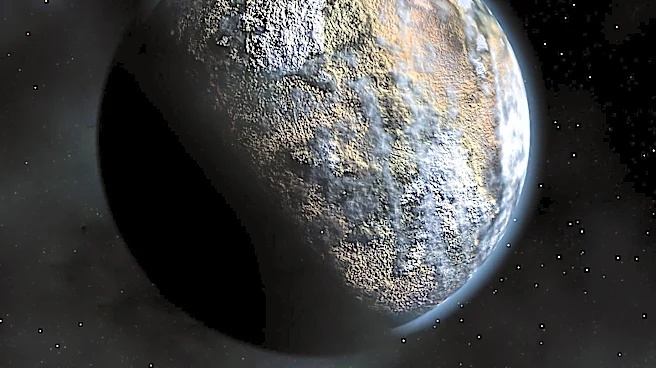
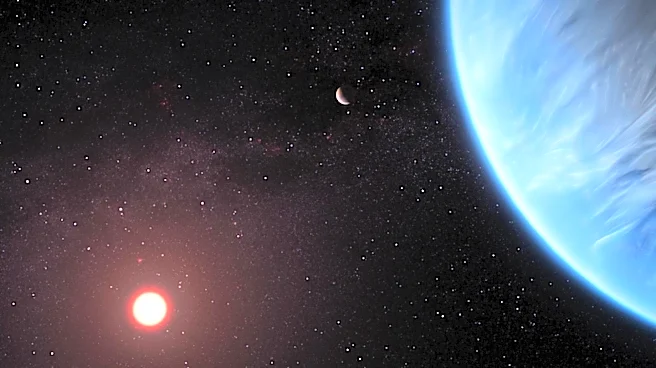
NASA's James Webb Space Telescope has revealed a hydrogen-rich atmosphere on the lava planet 55 Cancri e, located 41 light years from Earth. The planet, known for its extreme volcanic activity, was observed during five eclipses, showing unexpected atmospheric
composition. Researchers found abundant carbon monoxide and hydrogen, challenging previous models predicting carbon dioxide-rich atmospheres. These findings offer insights into the planet's interior chemistry and volcanic processes.
Why It's Important?
The discovery of a hydrogen-rich atmosphere on 55 Cancri e provides a rare glimpse into the chemical dynamics of lava exoplanets. Understanding the planet's redox state, which favors hydrogen over oxygen, can reveal details about its interior and volcanic activity. This research contributes to the growing interest in lava exoplanets, which are becoming increasingly common in astronomical studies. The findings may influence future exploration of extreme rocky worlds and their potential for hosting life.
What's Next?
Astronomers will continue to study 55 Cancri e and other lava exoplanets using powerful observatories like the James Webb Space Telescope. Future research may focus on the planet's volcanic outgassing and atmospheric variations. The study of lava exoplanets could lead to new models of planetary formation and evolution, enhancing our understanding of the universe's diversity. As more lava worlds are discovered, scientists will explore their potential for habitability and the unique conditions they present.