



What's Happening?
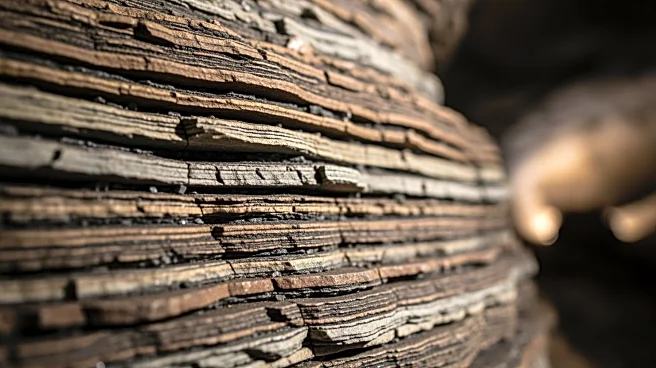
Researchers have identified a unique 12.4-mile-thick rock layer beneath Bermuda's oceanic crust, a discovery that challenges existing geological understanding. This layer, unlike any other found globally, lies beneath the crust within the tectonic plate
on which Bermuda sits. The island, known for its mysterious Bermuda Triangle, has not experienced volcanic activity for 31 million years, yet this thick layer suggests past volcanic events may have injected mantle rock into the crust, creating a buoyant 'raft' that elevates the ocean floor. The study, led by William Frazer from Carnegie Science, utilized seismic data to reveal this anomaly, which may explain the persistent oceanic swell around Bermuda despite the absence of recent volcanic activity.
Why It's Important?
This discovery is significant as it provides new insights into the geological processes that shape oceanic islands. Understanding the formation and persistence of Bermuda's oceanic swell could offer broader implications for studying other extreme geological locations. The findings challenge the conventional understanding of island formation, typically attributed to mantle hotspots, and suggest alternative processes may be at play. This could influence future geological research and the exploration of similar structures worldwide, potentially altering the scientific narrative on island and oceanic crust formation.
What's Next?
The research team plans to investigate other islands globally to determine if similar rock layers exist elsewhere, which could confirm whether Bermuda's geological structure is unique. This ongoing research may lead to a reevaluation of geological models and contribute to a deeper understanding of Earth's tectonic and volcanic history. The study's findings could also prompt further exploration into the implications of such structures on oceanic and island ecosystems.