





What's Happening?
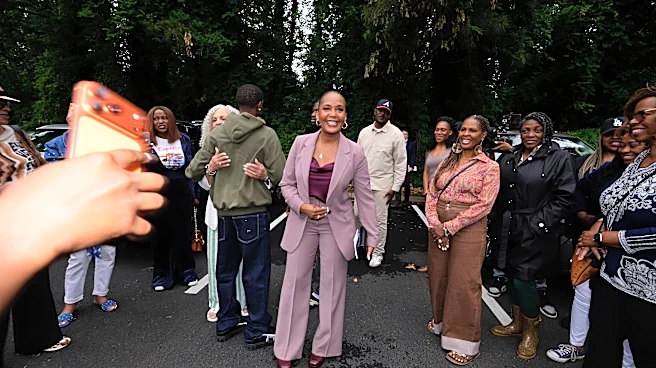
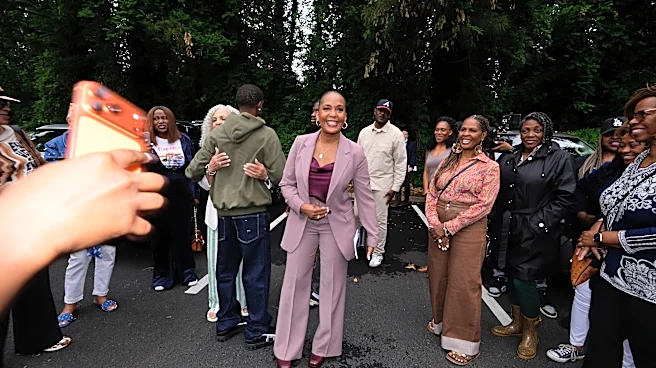
Former Atlanta Mayor Keisha Lance Bottoms has secured the Democratic nomination for the Georgia gubernatorial race, positioning herself to potentially become the first Black woman governor in U.S. history. Bottoms, who served as Atlanta's mayor from 2018
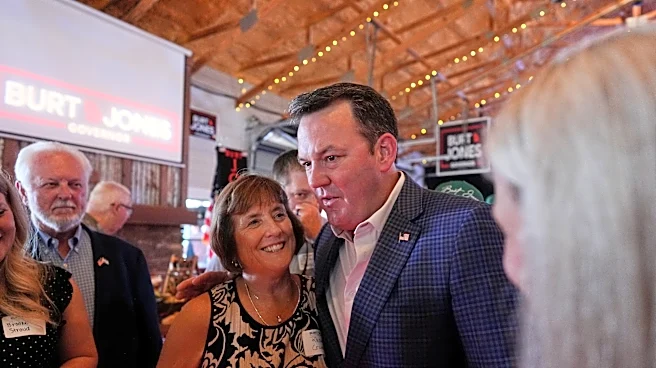
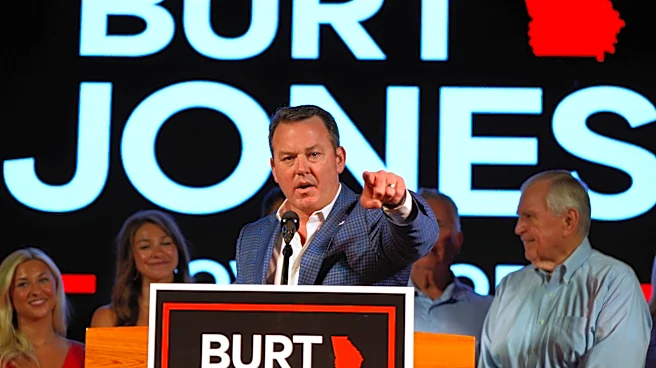
to 2022, emerged victorious from a competitive Democratic field. Her campaign focuses on expanding Medicaid coverage and increasing education funding. President Joe Biden has endorsed her candidacy, describing her as 'battle-tested' and prepared to lead the state. On the Republican side, Lt. Gov. Burt Jones and health care executive Rick Jackson will face off in a runoff to determine their party's nominee. The upcoming general election will be a significant test of Georgia's status as a swing state, following its narrow support for Biden in 2020 and subsequent shift back to President Trump.
Why It's Important?
Keisha Lance Bottoms' candidacy is historically significant as it represents a potential breakthrough in U.S. political history, with the possibility of her becoming the first Black woman governor. Her campaign addresses critical issues such as healthcare and education, which are pivotal in shaping public policy and impacting the lives of Georgia residents. The election will also serve as a barometer for Georgia's political landscape, which has been closely contested in recent years. A victory for Bottoms could signal a shift in the state's political alignment and influence future elections. Additionally, her success could inspire more diverse candidates to pursue leadership roles, potentially altering the demographic makeup of political offices across the country.
What's Next?
The general election will take place in November, where Bottoms will face the Republican nominee, determined after the June 16 runoff between Burt Jones and Rick Jackson. The outcome will be closely watched as an indicator of Georgia's political direction. Both parties are expected to intensify their campaigns, focusing on key issues such as healthcare, education, and economic development. Stakeholders, including political leaders and advocacy groups, will likely increase their engagement to influence voter turnout and sway undecided voters. The election results could have broader implications for national politics, particularly in shaping strategies for the 2028 presidential election.