






What's Happening?
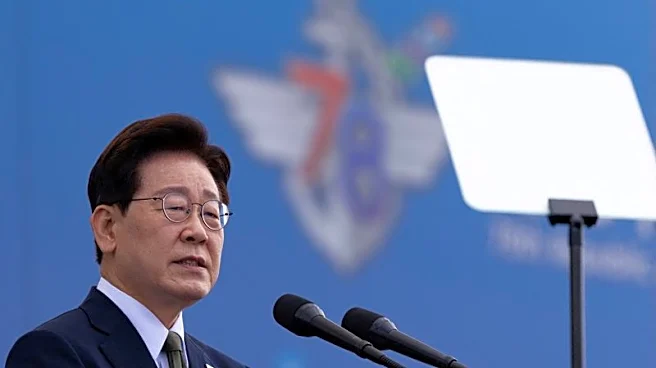
South Korean President Lee Jae-myung has unveiled three blueprints aimed at fostering peaceful coexistence between South and North Korea. These plans, announced during his August Liberation Day address, include 'inclusive peaceful coexistence' based on mutual
respect, 'stable peaceful coexistence' to prevent military conflicts, and 'responsible peaceful coexistence' to contribute to global peace. The government's objective is to normalize inter-Korean relations, ease military tensions, and eventually replace the armistice system with a peace regime. Additionally, the initiative seeks to halt North Korea's nuclear buildup and advance towards denuclearization. While these goals echo previous administrations' efforts, the current approach emphasizes reaffirming the commitment to peace despite severed inter-Korean relations and a changed geopolitical landscape. The administration has also taken steps such as halting loudspeaker broadcasts towards North Korea and pursuing institutional reforms for inter-Korean cooperation, favoring a phased approach to denuclearization.
Why It's Important?
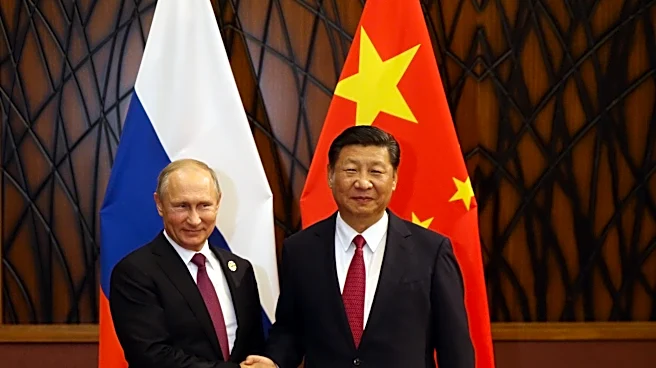
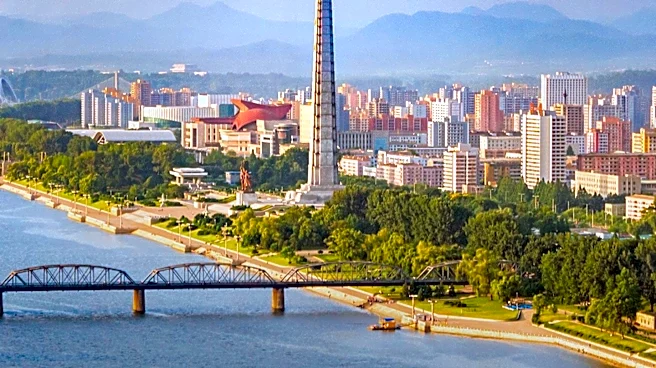
This initiative is significant because it reiterates South Korea's enduring commitment to peace on the Korean Peninsula amidst increasingly complex regional dynamics. The proposals aim to de-escalate tensions and prevent military clashes, which could have severe repercussions across East Asia and beyond. By seeking to normalize relations and move towards denuclearization, South Korea is attempting to address a long-standing security threat that impacts regional stability and global security. The phased approach to denuclearization, starting with halting further nuclear advancements, could potentially lower the barrier for negotiations and create an opening for dialogue. However, the success of these blueprints hinges on North Korea's willingness to engage, which has been uncertain given its recent stance of viewing South Korea as a 'hostile state' and its strengthened military cooperation with Russia. The outcome will influence the security architecture of Northeast Asia and potentially impact the strategic interests of major global powers.
What's Next?
The immediate next steps involve observing North Korea's reaction to President Lee's proposals. While South Korea has taken unilateral steps to ease tensions, such as halting loudspeaker broadcasts, reciprocal actions from Pyongyang are not guaranteed. The government will likely continue to seek diplomatic channels and prepare proposals for future negotiations, even if direct inter-Korean dialogue remains elusive. The potential for renewed US-North Korea talks could also influence the situation, as Pyongyang might prioritize direct engagement with Washington over Seoul. South Korea will need to define its role in any such discussions to ensure its interests are represented in building a peace regime. The effectiveness of the phased denuclearization approach will be tested by whether an initial nuclear freeze can lead to actual reductions. The People Power Party's stance on these initiatives will also be crucial, as domestic political consensus can impact the government's ability to pursue its peace agenda.
Beyond the Headlines
The deeper implications of President Lee's peace blueprints extend to the evolving nature of inter-Korean relations and regional power dynamics. North Korea's shift to defining relations as between 'two hostile states' fundamentally alters the context for any peace initiative, making traditional engagement strategies less effective. The increased military cooperation between North Korea and Russia further complicates efforts, potentially reducing Pyongyang's incentive to engage with Seoul or Washington. This situation highlights the challenge of pursuing coexistence when one party no longer shares the same political objectives of reconciliation or eventual unification. The ethical dimension involves the persistent pursuit of peace despite historical grievances and ongoing provocations, underscoring a commitment to preventing conflict. Legally, replacing the armistice with a peace regime would be a monumental step, requiring complex multilateral negotiations. Culturally, these efforts aim to bridge decades of division and foster a future of stability, even if the path remains fraught with obstacles.