





What's Happening?
Researchers from the U.S. Forest Service and The Nature Conservancy are actively engaged in a breeding program aimed at developing new generations of elm trees resistant to Dutch elm disease (DED). This initiative involves cultivating elms from survivors
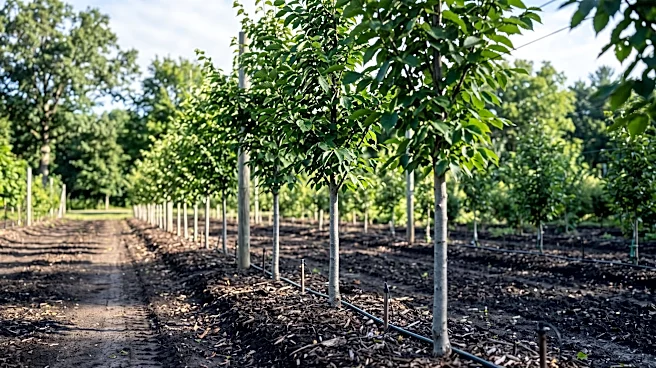
of the disease, with the goal of repopulating areas in North America where elm populations have been decimated for decades. The project, currently underway in Vermont, involves injecting thousands of young elm trees with fungus spores to identify and propagate those with natural resistance. This effort seeks to expedite the co-evolutionary process, allowing elms to coexist with DED, similar to how European elms have adapted over centuries. The loss of elms has had a devastating impact on urban landscapes and riverbanks, where these towering trees were once ubiquitous.
Why It's Important?
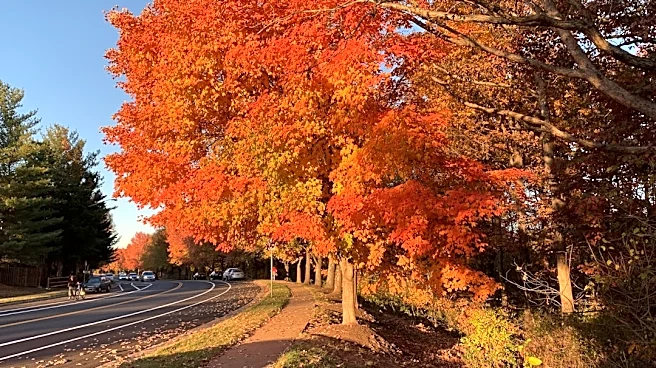
The widespread loss of elm trees due to Dutch elm disease has significant ecological and urban planning implications across the U.S. Elms provide crucial shade canopies, absorb stormwater, and contribute to complex, resilient ecosystems. Their decline has diminished biodiversity and ecosystem services in many areas. This research is vital for restoring these benefits, enhancing urban forests, and mitigating the effects of climate change by reintroducing a robust tree species. The success of this breeding program could offer a long-term, sustainable solution to DED, reducing the need for costly and often ineffective disease management strategies. It represents a proactive approach to conservation, aiming to restore a native species that has been severely impacted by an invasive pathogen.
What's Next?
The current phase of the project involves a large-scale experiment in Vermont, where approximately 6,000 seedlings from resistant trees are being tested for DED immunity. Researchers anticipate that these trees will begin producing seeds in about 15 years, which can then be used for broader restoration efforts. If successful, this program could lead to the widespread availability of DED-resistant elms for planting in urban and natural environments across the U.S. The long-term vision is to establish elm populations that can naturally withstand the disease, reducing the ecological and economic burden of DED. Continued monitoring and further breeding cycles will be necessary to ensure the durability and effectiveness of the resistance.
Beyond the Headlines
This initiative highlights a broader shift in conservation strategies towards fostering natural resilience within ecosystems rather than solely relying on reactive measures. By expediting the co-evolutionary process, scientists are essentially accelerating natural selection to address a significant environmental challenge. This approach could serve as a model for combating other tree diseases and invasive species that threaten U.S. forests. It also underscores the importance of long-term ecological research and cross-organizational collaboration between government agencies like the U.S. Forest Service and non-profits like The Nature Conservancy in addressing complex environmental issues with far-reaching impacts on public spaces and natural habitats.