









What's Happening?
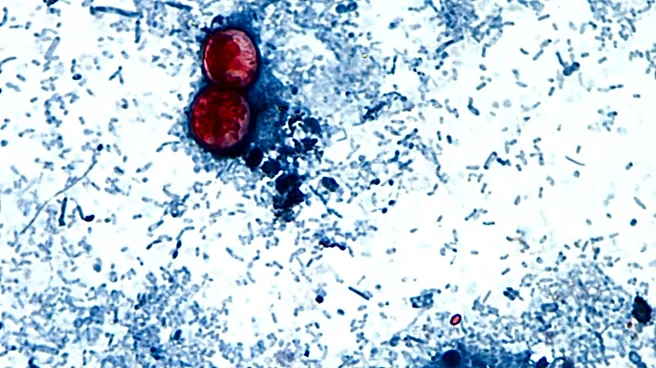
The Centers for Disease Control and Prevention (CDC) is investigating a significant outbreak of cyclosporiasis, an intestinal illness caused by the Cyclospora parasite, which has been reported in 31 states, with Ohio and Michigan being the most affected.
Michigan alone has reported over 1,500 cases, a substantial increase from the typical 50 cases per year. The outbreak has led to 86 hospitalizations, although no fatalities have been reported. The CDC is conducting a traceback investigation to identify the source of the outbreak, which is suspected to be linked to contaminated food or water. Previous outbreaks have been associated with fresh produce such as raspberries and leafy greens. The investigation process involves interviewing affected individuals to determine common food sources, a challenging task due to the time lapse between infection and symptom onset.
Why It's Important?
The outbreak of cyclosporiasis poses a significant public health concern, particularly in the Midwest, where the number of cases has surged. Identifying the source of the outbreak is crucial to prevent further spread and protect public health. The situation highlights the vulnerabilities in the food supply chain, especially concerning fresh produce, which can be difficult to decontaminate. The outbreak also underscores the importance of food safety practices and the need for robust surveillance systems to quickly identify and respond to such health threats. The economic impact could be substantial, affecting the agriculture sector and potentially leading to increased scrutiny and regulation of food safety standards.
What's Next?
The CDC will continue its investigation to trace the source of the Cyclospora outbreak, which may take weeks or longer. Public health officials are likely to issue further guidance on food safety practices to prevent infection. If a specific food source is identified, it could lead to recalls and increased regulatory measures. The agriculture industry, particularly producers of fresh produce, may face heightened inspections and pressure to implement more rigorous safety protocols. Public awareness campaigns may be launched to educate consumers on safe food handling practices to reduce the risk of infection.