





What's Happening?
The Gilded Age, spanning from approximately the 1870s to 1900, was a period of unprecedented industrialization and economic growth in the United States. During this time, industries such as railroads, steel, and oil expanded rapidly, leading to the accumulation
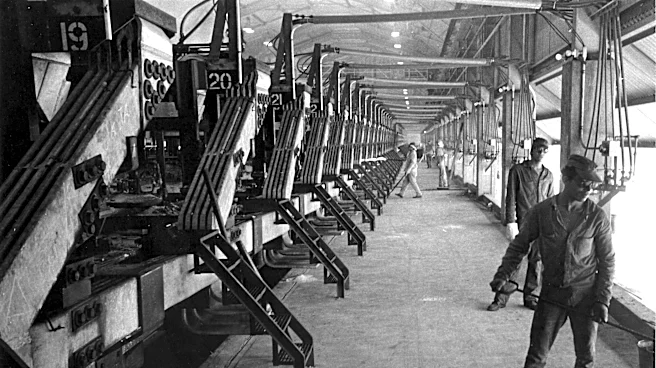
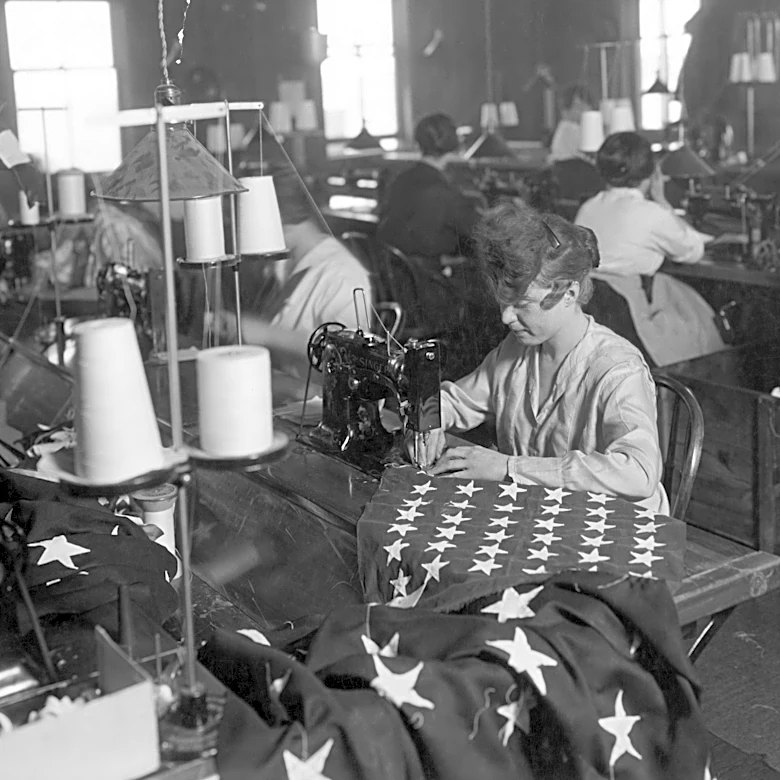
of vast fortunes by a select few businessmen, often referred to as 'captains of industry' or 'robber barons.' Concurrently, millions of workers, farmers, and immigrants faced long hours, low wages, and difficult living conditions. The term 'Gilded Age' itself, coined by Mark Twain in an 1873 satirical novel, suggests that the era's glittering prosperity merely concealed underlying social and political problems. Key developments included the expansion of the railroad network, technological advancements like the Bessemer process for steel and the invention of the telephone, a significant increase in population due to immigration, and government policies that favored businesses through high tariffs and limited regulation.
Why It's Important?
This era fundamentally reshaped the U.S. economy and society, laying the groundwork for modern industrial capitalism. The rise of powerful corporations and monopolies, such as those controlled by Andrew Carnegie (steel) and John D. Rockefeller (oil), demonstrated the potential for immense wealth creation but also highlighted the concentration of economic power. The struggles of workers, leading to the formation of labor unions like the Knights of Labor and the American Federation of Labor, and significant strikes such as the Great Railroad Strike of 1877 and the Pullman Strike, underscored the growing class divide and the need for labor protections. The period also saw the emergence of political corruption, prompting early reform efforts like the Pendleton Civil Service Reform Act and initial attempts at federal regulation with the Interstate Commerce Act and the Sherman Antitrust Act. The Gilded Age's legacy includes both remarkable economic progress and enduring questions about social justice and economic equality.
What's Next?
The Gilded Age eventually gave way to the Progressive Era in the early 1900s, driven by reformers, journalists (muckrakers), and a growing middle class demanding cleaner government, business regulation, and improved working conditions. While the Gilded Age itself concluded, many of its features, such as large corporations and significant wealth disparities, persisted and continued to influence subsequent periods of American history. The challenges and reforms initiated during this time set precedents for future government intervention in the economy and the ongoing debate about the balance between individual prosperity and collective well-being. Historians continue to draw comparisons between the Gilded Age and later periods, recognizing its lasting impact on the structure of American society and its economic systems.
Beyond the Headlines
Beyond the economic and political shifts, the Gilded Age also had profound cultural and social implications. The immense wealth of the 'new rich' led to extravagant displays of luxury, contrasting sharply with the poverty experienced by many. This era saw the rise of distinct social classes and the establishment of exclusive social circles, as depicted by figures like Mrs. Caroline Astor and her 'Four Hundred' list. The period also witnessed significant social tensions, including the marginalization of Black Americans after the end of Reconstruction, the violence and discriminatory legislation against Chinese immigrants (e.g., the Chinese Exclusion Act), and the continued displacement of Native American nations. These social dynamics highlight the uneven distribution of the era's prosperity and the deep-seated inequalities that persisted beneath the surface of rapid progress.