




What's Happening?
The National Institute for Occupational Safety and Health (NIOSH) has released a report detailing its investigation into a serious firefighter injury that occurred in May 2026. A Jackson Hole Fire/EMS firefighter, identified as Charlie Crotteau, sustained
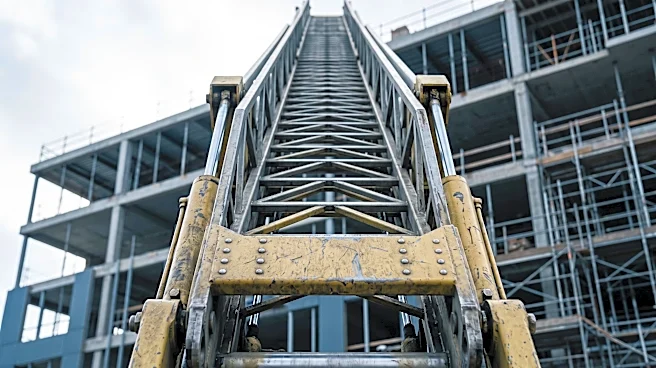
fractures to his lower leg and heel after falling 20 feet from an aerial platform during vertical ventilation operations at a commercial structure fire in the Aspens. The investigation, voluntarily initiated by Jackson Hole Fire/EMS, identified several contributing factors, including issues with initial scene size-up and risk assessment, training for specialty truck teams, and familiarity with standard operating procedures. A delayed fire department activation due to the building lacking a monitored fire detection system was also noted. NIOSH's report aims to provide educational resources and promote firefighter safety nationwide.
Why It's Important?
This report is crucial for enhancing firefighter safety across the U.S. fire service. The recommendations from NIOSH, such as using appropriate fall-protection systems, conducting thorough risk assessments, bolstering training, and reinforcing operational risk management, can serve as a blueprint for fire departments nationwide to prevent similar incidents. The incident highlights the inherent dangers of firefighting and the critical need for continuous improvement in safety protocols and training. For fire departments, implementing these recommendations can lead to safer working conditions for their personnel, potentially reducing injuries and fatalities. For the public, improved firefighter safety ensures that emergency services can operate effectively and respond to crises with minimal risk to their personnel.
What's Next?
In response to the incident, Jackson Hole Fire/EMS has already implemented a safety stand-down focused on vertical ventilation operations, initiated a comprehensive review of operational procedures, and begun developing a task book for specialty truck teams to standardize training. Other fire departments across the U.S. are expected to review the NIOSH report and consider adopting its recommendations to improve their own safety practices. This may lead to updated training programs, revised standard operating procedures, and increased emphasis on risk assessment before engaging in high-risk tasks. The report's findings will likely contribute to ongoing discussions within the fire service community about best practices for aerial operations and overall firefighter safety.
Beyond the Headlines
Beyond the immediate safety implications, this incident and the subsequent NIOSH report underscore broader issues concerning public safety infrastructure and building codes. The delayed fire department notification due to the absence of a monitored fire detection system in the commercial building raises questions about the adequacy of current regulations for fire safety in commercial properties. This could prompt discussions at local and state levels regarding mandatory fire detection systems and their monitoring. Furthermore, the report highlights the continuous need for investment in advanced training and equipment for emergency responders, reflecting a societal commitment to protecting those who protect communities. The lessons learned from this incident could influence policy changes aimed at preventing future tragedies.