
What's Happening?
Trump administration officials, including Homeland Security Secretary Markwayne Mullin and Small Business Administration Administrator Kelly Loeffler, engaged in a public dispute with New York Governor
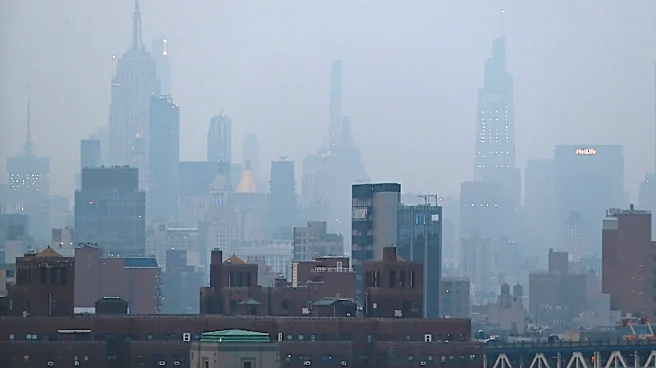
Kathy Hochul and Mayor Zohran Mamdani. Secretary Mullin criticized Mayor Mamdani for not cooperating with immigration authorities and Governor Hochul for a state law barring 287-g cooperation agreements with ICE. Mullin touted 'Operation Rotten Apple,' an enforcement action that he claimed removed over 2,100 undocumented criminals from New York streets, and threatened to send more federal agents to the city. In response, Governor Hochul and Mayor Mamdani accused President Trump of 'defunding the police' by withholding $87 million in federal counterterrorism funding, arguing that this impacts the NYPD, FDNY, and emergency preparedness. Separately, Administrator Loeffler criticized Mayor Mamdani's plan for city-owned grocery stores, asserting that it represents government overreach and threatens small businesses, aligning with the Trump administration's stance against what she termed 'socialist' policies.
Why It's Important?
This exchange highlights a significant and ongoing political and ideological clash between the Trump administration and New York's state and city leadership. The dispute over federal counterterrorism funding directly impacts New York City's ability to maintain its security infrastructure, potentially affecting public safety and emergency response capabilities. The accusations of 'defunding the police' by withholding funds introduce a contentious narrative into the debate, particularly given the historical context of the 9/11 attacks in New York. Furthermore, the disagreement over immigration enforcement policies underscores the broader national debate on federal versus state authority and the treatment of undocumented immigrants. The Trump administration's criticism of Mayor Mamdani's grocery store plan also reflects a fundamental difference in economic philosophy, pitting free-market principles against government intervention aimed at addressing affordability. This political friction could lead to further federal-state confrontations, impacting resource allocation and policy implementation in New York and potentially influencing national political discourse.
What's Next?
The immediate future will likely see continued rhetoric and potential actions from both sides. Secretary Mullin's threat to send more federal enforcement agents to New York suggests a possible escalation in immigration-related operations, which could lead to increased tensions and protests. Governor Hochul and Mayor Mamdani are expected to continue demanding the release of the federal counterterrorism funding, potentially exploring legal avenues or public pressure campaigns. The ongoing legal challenges against Mayor Mamdani's city-owned grocery store plan, supported by the Trump administration, will proceed in court, with the first store expected to open in the Bronx next year. This will serve as a test case for the economic viability and community acceptance of such initiatives. The broader political implications of these disputes could also play a role in upcoming elections, as both sides use these issues to rally their respective bases and define their policy platforms.
Beyond the Headlines
This political sparring reveals deeper ideological fault lines concerning governance, federalism, and economic policy in the United States. The Trump administration's characterization of New York as a 'crime-ridden city' and its leaders as 'socialist' reflects a broader conservative critique of progressive urban policies. Conversely, the accusations of 'defunding the police' against President Trump by New York leaders highlight the politicization of public safety and national security funding. The debate over immigration enforcement touches on fundamental questions of human rights, national sovereignty, and the role of local jurisdictions in federal matters. The clash over city-owned grocery stores also brings to the forefront the philosophical debate about the extent of government's role in addressing social and economic inequalities. These ongoing conflicts are not merely about specific policies but represent a struggle over competing visions for American society and the balance of power between different levels of government.