
What's Happening?
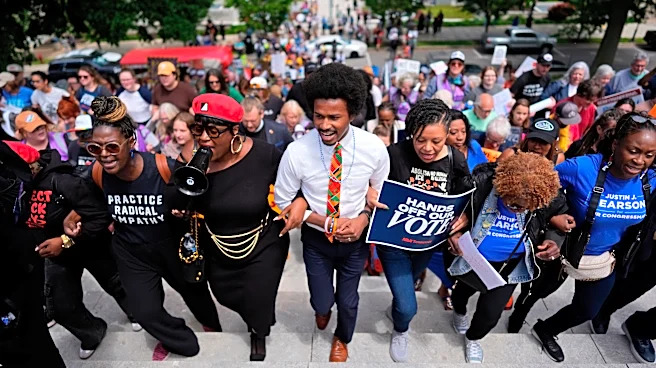
Martin Luther King III, a prominent civil rights leader, has expressed concern over recent actions by the Supreme Court that have accelerated changes to electoral maps. He is urging Tennessee leaders to pause
their redistricting plans, which he believes echo the discriminatory practices of the Jim Crow era. The Supreme Court's decision has sparked a debate over the fairness and potential racial implications of the new district maps. King III's call to action highlights the ongoing struggle for voting rights and fair representation in the United States, particularly in states with a history of racial discrimination in voting.
Why It's Important?
The issue of redistricting is crucial as it directly impacts the political landscape and representation in the U.S. Changes to district maps can influence election outcomes by determining which party has a better chance of winning certain seats. The concerns raised by Martin Luther King III underscore the potential for these changes to disenfranchise minority voters, a problem that has historical roots in the U.S. The Supreme Court's involvement adds a layer of complexity, as its decisions can set precedents affecting future redistricting efforts nationwide. This situation highlights the ongoing challenges in ensuring equitable representation in American democracy.