









What's Happening?
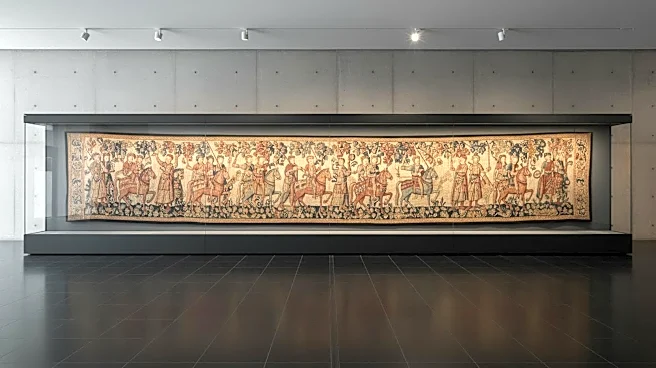
The British Museum has achieved a record-breaking day of ticket sales for its upcoming Bayeux Tapestry exhibition, generating £2.5 million on the first day alone. The exhibition, which will display the medieval tapestry depicting the 1066 Norman invasion
and Battle of Hastings, is set to open in September 2026. This marks the first time the tapestry will be shown in Britain in nearly a millennium. The museum's website experienced unprecedented traffic, with an online queue peaking at over 80,000 people. The initial batch of tickets, covering September to December, has already sold out, with further releases scheduled for later dates. The exhibition will be held in the Sainsbury Exhibitions Gallery while the tapestry's home in Normandy undergoes renovations.
Why It's Important?
The overwhelming demand for the Bayeux Tapestry exhibition underscores the public's interest in historical artifacts and cultural heritage. This event not only highlights the tapestry's significance as a historical document but also demonstrates the British Museum's ability to attract large audiences. The financial success of the ticket sales is crucial for the museum, which operates as a charity and needs to recoup the costs of hosting such an expensive exhibition. Additionally, the exhibition strengthens cultural ties between the UK and France, as the tapestry is on loan from France as part of a bilateral cultural season.
What's Next?
With the initial ticket release sold out, the British Museum plans to release additional tickets in October and January for viewing slots extending into 2027. The museum will continue to manage high demand and ensure a smooth visitor experience. The exhibition's success may encourage similar high-profile loans and collaborations in the future, potentially leading to more international cultural exchanges. Stakeholders, including cultural institutions and government bodies, will likely monitor the exhibition's impact on tourism and cultural diplomacy.
Beyond the Headlines
The Bayeux Tapestry exhibition raises important questions about the preservation and display of fragile historical artifacts. The decision to display the tapestry horizontally for the first time in a specially designed case reflects ongoing efforts to balance public access with conservation needs. This approach may set a precedent for future exhibitions of delicate items. Additionally, the exhibition's success could influence funding and policy decisions related to cultural heritage preservation and international loans.