





What's Happening?
The Antarctic krill fishery reached its 620,000-tonne trigger limit in both 2025 and 2026, leading to early closures in August, months ahead of schedule. This marks the first time the limit has been hit two years in a row. The 45th meeting of the Commission
for the Conservation of Antarctic Marine Living Resources (CCAMLR) in Hobart, Tasmania, in October 2026, concluded without adopting any new marine protected areas (MPAs) or new regulations for the krill fishery. This is the tenth consecutive year without a new Antarctic MPA and the third year in a row without new krill safeguards. Proposals for new MPAs, including a 456,000 square kilometer area in Domain 1, where krill fishing is concentrated, were blocked by member states like Russia and China. The early closures are attributed to the lapse of a safeguard in 2024 that previously spread fishing efforts across different areas, leading to concentrated fishing in specific grounds.
Why It's Important?
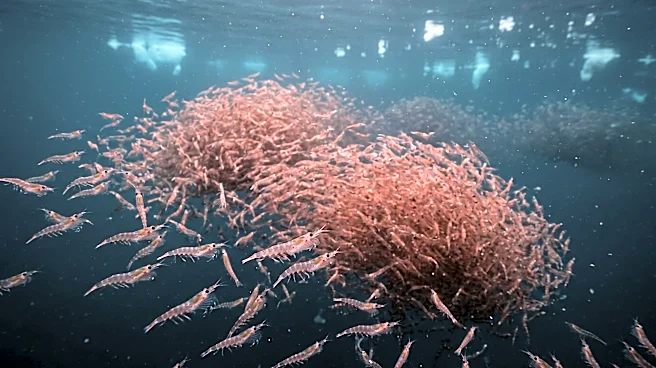
The continued failure to establish new marine protected areas and krill safeguards in the Antarctic has significant implications for the Southern Ocean ecosystem and global markets. Krill is a keystone species, forming the base of the food web for penguins, seals, whales, and seabirds. Increased and concentrated fishing pressure, driven by rising demand for omega-3 fatty acids and aquaculture feed, threatens this delicate balance. The lack of new regulations means that the fishery will continue to operate under existing limits, which have proven insufficient to prevent early closures and potential localized depletion. This situation could exacerbate the strain on marine wildlife that relies on krill for sustenance. Furthermore, the global aquaculture industry, including shrimp farmers, faces potential supply deficits and rising feed costs if krill supply tightens, as krill meal and oil are crucial ingredients in fishmeal-based feeds. The deadlock at CCAMLR highlights the challenges of international consensus-based conservation efforts, where individual member states can block critical environmental protections.
What's Next?
Following the stalled negotiations, intersessional talks are planned to continue discussions on the krill management system and the proposed Domain 1 MPA, with both on the table for the 46th CCAMLR meeting in 2027. Without new rules, the krill fishery will again be managed under the existing 620,000-tonne trigger limit in 2027, potentially leading to another early closure in August. The industry association ARK has indicated it will push for the adoption of both the krill management system and the Domain 1 MPA in 2027. The global feed markets will be closely watching fishmeal and fish oil prices through the first half of 2027, as the krill season and Peru's anchovy season will jointly determine whether supply pressures ease or intensify. Conservation groups are renewing calls for consumers and supermarkets to boycott krill products, citing retailers like Whole Foods in the U.S. that have already removed or committed to remove krill products from shelves.
Beyond the Headlines
The ongoing deadlock at CCAMLR underscores a broader tension between economic interests and environmental conservation in international governance. The consensus-based decision-making process, while intended to ensure broad agreement, effectively grants veto power to individual members, hindering progress on critical environmental issues. The situation also highlights the interconnectedness of global ecosystems and economies; the fate of a tiny crustacean in Antarctica can influence feed prices for aquaculture industries worldwide. The entry into force of the UN High Seas Treaty (BBNJ Agreement) in January 2026 offers a new legal tool for protecting marine life beyond national jurisdiction, though its interaction with existing bodies like CCAMLR within their convention areas remains to be fully seen. This development could signal a shift in global ocean governance, potentially offering alternative pathways for conservation when established bodies face persistent impasses.