



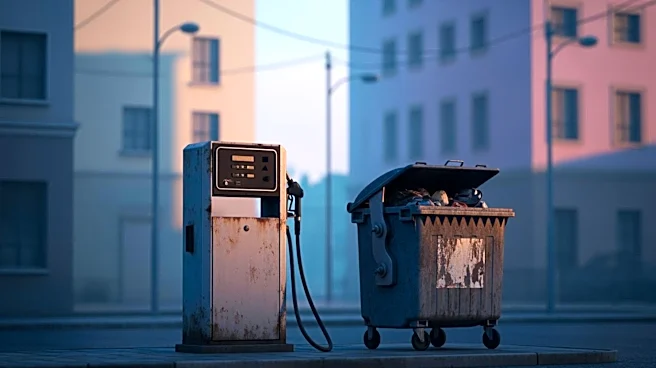
What's Happening?
Cuba is facing a severe fuel crisis, exacerbated by a U.S. energy blockade, which has left many of the island's iconic vintage cars, known as 'almendrones,' idle. These classic American cars, which have been a symbol of Cuban ingenuity and resilience,
are now struggling to find fuel. The crisis has been ongoing since January, with Cuban officials attributing the shortages to tightened U.S. sanctions. The scarcity of fuel has forced many Cubans to rely on a government reservation app, which has become a symbol of the shortages. The situation is further complicated by the high prices of fuel on the black market, making it difficult for many to keep their cars running.
Why It's Important?
The fuel crisis in Cuba highlights the broader implications of international sanctions and their impact on everyday life. The iconic 'almendrones' are not just a mode of transportation but a cultural symbol and a vital part of Cuba's transportation network. The inability to fuel these cars affects not only personal mobility but also the livelihoods of those who depend on them for work. The crisis underscores the challenges faced by countries under economic sanctions and the resilience required to adapt to such conditions. It also raises questions about the sustainability of relying on vintage vehicles in a modernizing world.
Beyond the Headlines
The situation in Cuba reflects the broader geopolitical tensions between the U.S. and Cuba, with the energy blockade serving as a tool of political pressure. The crisis also highlights the ingenuity of the Cuban people, who have historically adapted to shortages through creativity and resourcefulness. As Cuba explores alternative energy sources, such as electric vehicles and solar-powered charging stations, the crisis could accelerate a shift towards more sustainable transportation solutions. However, the transition will require significant investment and infrastructure development, posing additional challenges for the island nation.