
What's Happening?
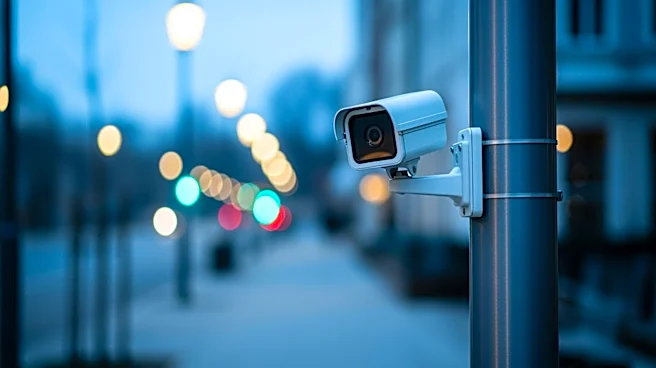
The number of surveillance cameras in U.S. cities has significantly increased over the past decade, with nearly 537,000 cameras operating across the 50 largest cities, according to Comparitech's 2024 U.S. Surveillance
Camera Study. This equates to an average of about 11 cameras per 1,000 residents, with some cities like Atlanta having as many as 124 cameras per 1,000 residents. The increase in surveillance is aimed at improving safety and aiding law enforcement by deterring crime and providing crucial evidence. However, this growth has sparked concerns about privacy and data protection, as highlighted by civil liberties groups such as the American Civil Liberties Union (ACLU) and the Brennan Center for Justice.
Why It's Important?
The expansion of surveillance cameras in urban areas has significant implications for privacy and civil liberties. While these cameras can enhance public safety and assist in crime investigations, they also raise concerns about how the collected data is stored, shared, and used. The lack of a unified surveillance privacy law in the U.S. means that regulations vary widely across states, potentially leading to misuse of data and erosion of public trust. The use of facial recognition technology, in particular, has been criticized for its potential to track individuals without their consent, as evidenced by cases of wrongful arrests due to false matches. The debate centers on balancing public safety with the need for robust privacy safeguards.
What's Next?
As surveillance technology continues to evolve, cities and states will need to address the governance gap in data protection and privacy. This may involve implementing stricter regulations on data retention, access controls, and the use of biometric analytics. Public discourse and policy-making will likely focus on ensuring that surveillance measures are transparent and accountable, with clear guidelines to protect individual privacy rights. Civil liberties groups are expected to continue advocating for stronger oversight and legal frameworks to prevent potential abuses of surveillance data.
Beyond the Headlines
The proliferation of surveillance cameras in U.S. cities reflects broader societal trends towards increased monitoring and data collection. This shift raises ethical questions about the extent to which individuals are willing to trade privacy for security. The potential for surveillance to disproportionately affect marginalized communities, who may already face heightened scrutiny, is another critical issue. Long-term, the integration of advanced technologies like artificial intelligence in surveillance systems could further complicate the landscape, necessitating ongoing dialogue about the ethical use of such technologies.