
What's Happening?
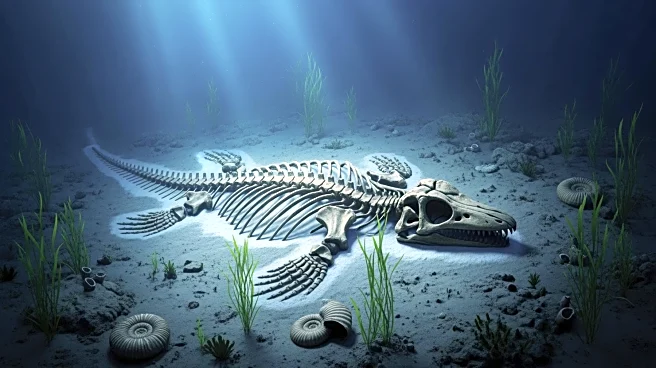
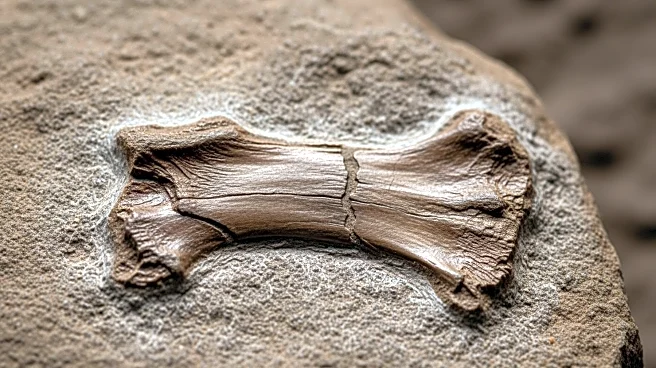
Researchers have discovered the first plesiosaurian fossil in Algeria, dating back to the Late Coniacian period. The fossil, a single vertebra, was found in the Tébessa region and provides valuable insights into the stratigraphic and paleobiogeographic
record of these ancient marine reptiles. This discovery fills a gap in the fossil record of plesiosaurs in Northwest Africa, where no Coniacian fossils had been previously found. The study, published in Historical Biology, highlights the significance of this find in understanding the distribution and evolution of plesiosaurs.
Why It's Important?
The discovery of a plesiosaurian fossil in Algeria is crucial for paleontology, as it provides new data on the distribution and evolution of these marine reptiles during the Cretaceous period. This find helps fill a gap in the fossil record, offering insights into the biodiversity and ecological dynamics of the time. It also underscores the importance of continued paleontological exploration in under-researched regions, which can lead to significant scientific breakthroughs and enhance our understanding of Earth's prehistoric life.
What's Next?
Following this discovery, researchers plan to conduct further fieldwork in the Tébessa area to search for additional fossils and map potential fossiliferous horizons. These efforts aim to uncover more about the Coniacian period's marine life and contribute to the global paleobiogeographic record. The study's findings may also encourage similar research in other regions, potentially leading to more discoveries that could reshape our understanding of ancient marine ecosystems.