




What's Happening?
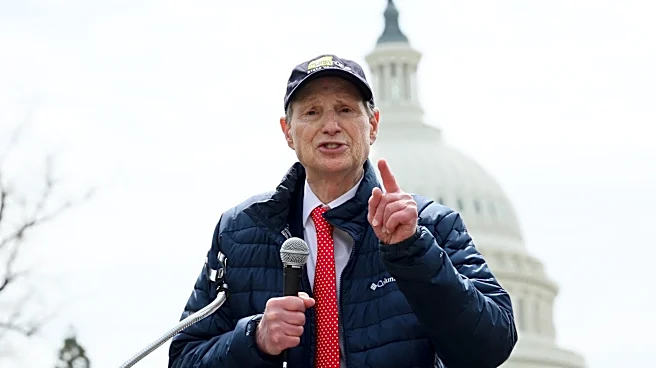
U.S. Senator Jacky Rosen's 'Smarter Weather Forecasting for Water Management, Farming, and Ranching Act' has successfully passed the Senate as part of the bipartisan Weather Act. This legislation is designed to enhance weather forecasting capabilities
for the benefit of Nevada's agricultural sector. The bill establishes new subseasonal and seasonal forecasting pilot projects under the National Oceanic and Atmospheric Administration (NOAA). These projects aim to improve advanced forecasts, covering periods from two weeks to two years, thereby creating more consistent short-term and long-term weather predictions. The primary goal is to better prepare farmers and ranchers for potential weather anomalies, such as flash floods or extreme drought conditions. The bill now moves to the House of Representatives for further consideration, and if passed there, it will proceed to the President's desk for signature. Senator Rosen emphasized the importance of investing in weather prediction technology and funding NOAA programs, especially given the increasing frequency of extreme weather events.
Why It's Important?
This legislative development is crucial for U.S. agricultural communities, particularly in states like Nevada that are highly susceptible to extreme weather patterns. Improved weather forecasting directly impacts the operational efficiency and financial stability of farmers and ranchers. By providing more accurate and timely predictions, the bill can help these stakeholders make informed decisions regarding crop planting, irrigation, livestock management, and resource allocation. This proactive approach can mitigate significant economic losses caused by unexpected weather events, such as droughts that deplete water resources or floods that destroy crops and infrastructure. Furthermore, the bill's focus on long-term forecasting can aid in strategic planning for water management, a critical issue in arid regions. The bipartisan support for the Weather Act underscores a national recognition of the need for enhanced climate resilience and agricultural support.
What's Next?
The 'Smarter Weather Forecasting for Water Management, Farming, and Ranching Act' now awaits consideration and a vote in the House of Representatives. If it successfully passes the House, it will then be sent to the President for his signature to become law. Should the bill be enacted, NOAA will be tasked with implementing the new subseasonal and seasonal forecasting pilot projects. This will involve developing and deploying advanced weather prediction technologies and methodologies. Farmers and ranchers in Nevada, and potentially other regions, will then begin to benefit from more consistent and accurate weather forecasts, enabling them to better prepare for and respond to environmental challenges. Continued monitoring of the bill's progress through the legislative process will be essential for stakeholders in the agricultural and environmental sectors.
Beyond the Headlines
The passage of this bill reflects a broader national trend towards integrating advanced scientific research and technology into practical applications for climate resilience. Beyond its immediate impact on agriculture, the enhanced forecasting capabilities could have wider implications for various sectors, including disaster preparedness, water resource management for urban areas, and even energy infrastructure planning. The emphasis on both short-term and long-term predictions highlights a shift towards more comprehensive environmental planning, moving beyond immediate crisis response to proactive adaptation. This legislative effort also underscores the growing recognition of climate change's tangible effects on local economies and the necessity for federal intervention to support vulnerable industries. The collaboration between scientific agencies like NOAA and legislative bodies signifies a commitment to evidence-based policymaking in addressing complex environmental challenges.