




What's Happening?
A Utah advocacy group, the Utah Civic Compact, is calling on Governor Spencer Cox to pause the operation of Flock Safety cameras on state highways. The group argues that the Utah Department of Transportation (UDOT) has overstepped its authority by requiring
a license agreement with Flock Safety for camera operations on state right-of-ways, asserting that no statute grants UDOT this power. While a 2023 Utah law permits UDOT to issue permits for these cameras when requested by law enforcement, the Utah Civic Compact contends that UDOT's agreement with Flock establishes conditions for camera operations independently of specific law enforcement contracts. The group initially asked UDOT to terminate its contract in October, citing public support as a condition for termination, but has now directly appealed to Governor Cox to halt camera operations until new legislation is enacted. UDOT, however, maintains its role is limited to ensuring proper permitting and safe installation, not the use of the equipment.
Why It's Important?
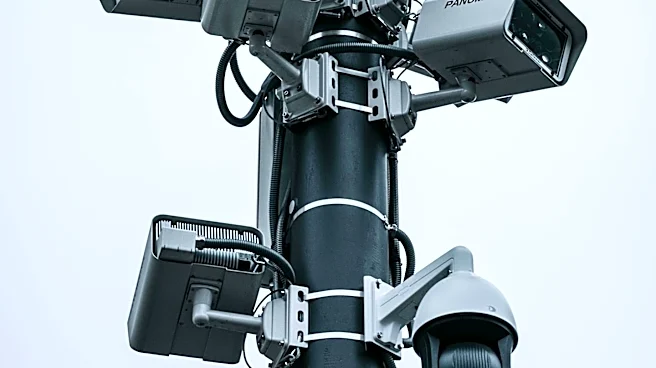
This development highlights a growing tension between public safety measures and privacy concerns in Utah. The Utah Civic Compact's actions underscore a broader debate about the scope of government surveillance and the regulatory framework surrounding automated license plate readers (ALPRs). The group's assertion that UDOT has exceeded its statutory authority raises questions about accountability and the proper checks and balances in deploying such technology. The controversy is further fueled by revelations that a significant portion of Flock Safety data searches in Weber County originated from out-of-state law enforcement agencies, a fact that Governor Cox himself found 'deeply troubled.' This situation could set a precedent for how other states approach the regulation and oversight of ALPR systems, particularly concerning data sharing and potential misuse by law enforcement.
What's Next?
The immediate next step involves Governor Cox's response to the Utah Civic Compact's request to pause camera operations. Utah lawmakers are already studying legislative proposals to better regulate these systems, indicating that new legislation is likely on the horizon. The key question for lawmakers is not whether to allow the cameras, but how to effectively regulate their use to prevent misuse while still supporting law enforcement. Potential legislative actions could include stricter guidelines on data access, retention, and sharing, as well as enhanced oversight mechanisms. The outcome of this debate could influence how law enforcement agencies across Utah utilize ALPR technology and could lead to a more defined legal framework for surveillance technologies in the state.
Beyond the Headlines
The debate surrounding Flock Safety cameras in Utah touches upon fundamental ethical and legal questions regarding privacy in the digital age. The concerns about potential misuse, such as police officers using ALPR data for personal reasons, highlight the vulnerability of such systems to abuse and the need for robust safeguards. The Utah Civic Compact's push for agencies to own and control the data collected, with vendors only processing it on their behalf, points to a broader discussion about data governance and vendor accountability in public-private partnerships involving surveillance technology. This situation could also prompt a re-evaluation of existing state laws concerning data privacy and surveillance, potentially leading to more comprehensive legislation that addresses the rapid advancements in monitoring technologies and their implications for civil liberties.