









What's Happening?
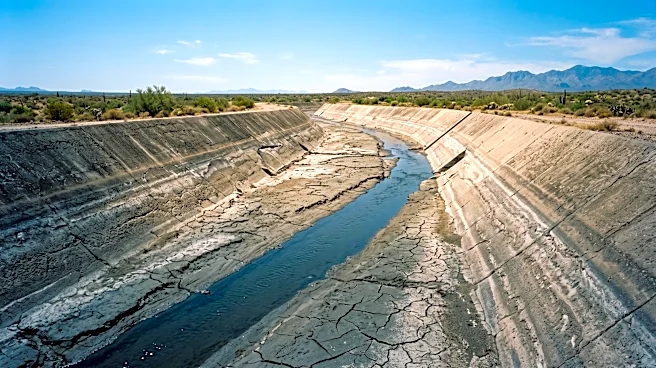
Residents in Arizona, particularly in Tucson and Marana, are actively opposing the development of new hyperscale data centers, such as Project Blue by Beale Infrastructure, due to significant concerns over water consumption in the drought-stricken state.
The No Desert Data Center Coalition has been formed to lead protests and legal challenges against these projects. While the Taiwan Semiconductor Manufacturing Company (TSMC) facility in Phoenix, a major chip manufacturer, has been largely welcomed despite its substantial water usage, newer data center proposals are facing intense backlash. Locals argue that the state's dwindling water resources, exacerbated by climate change and historical over-reliance on agriculture, should not be further strained by water-intensive tech industries. The opposition highlights a growing tension between economic development driven by the tech sector and environmental sustainability in arid regions.
Why It's Important?
This situation underscores a critical conflict between rapid technological expansion, particularly in AI and data infrastructure, and environmental sustainability in regions facing resource scarcity. Arizona's struggle with water allocation for data centers reflects a broader national challenge as the demand for computing power grows. The pushback from local communities and environmental groups could influence future zoning laws, environmental regulations, and the economic development strategies of states looking to attract tech investment. It also highlights the differing perceptions of economic value; while some leaders see tech as a path to prosperity, residents prioritize the preservation of essential resources like water. The debate could set precedents for how states balance industrial growth with ecological responsibility, potentially leading to more stringent requirements for water and energy efficiency in data center operations nationwide.
What's Next?
The No Desert Data Center Coalition continues its efforts to halt data center construction, including ongoing protests and legal actions. While some local governments, like the Pima County Board of Supervisors, have imposed moratoriums on new data center projects, developers like Beale Infrastructure are proceeding with existing approvals. The Tucson City Council has implemented new, stringent limits on data centers, making them one of the most regulated developments in the city, but residents are pushing for a full ban. The state's attorney general has also filed an appeal against the Arizona Corporation Commission regarding a special energy agreement for Beale. These actions suggest a prolonged legal and political battle, with potential for further policy changes at local and state levels regarding water usage and environmental impact assessments for large industrial projects.
Beyond the Headlines
The opposition to data centers in Arizona reveals deeper societal and ethical questions about the true cost of technological advancement. Beyond the immediate concern of water scarcity, critics like the No Desert Data Center Coalition connect these developments to broader issues of extractive industry, mass surveillance, and the social impact of tech. The debate also touches on the historical context of Arizona's water management, tracing back to pre-Columbian civilizations and early American settlement, suggesting that current challenges are a continuation of long-standing patterns of resource exploitation. The differing public reception between TSMC and data centers, despite both being water-intensive, points to a nuanced understanding of economic benefit versus environmental burden, where job creation and perceived community integration play a significant role in public acceptance. This conflict highlights the need for a more holistic evaluation of industrial projects, considering not just economic output but also long-term environmental and social equity.