



What's Happening?
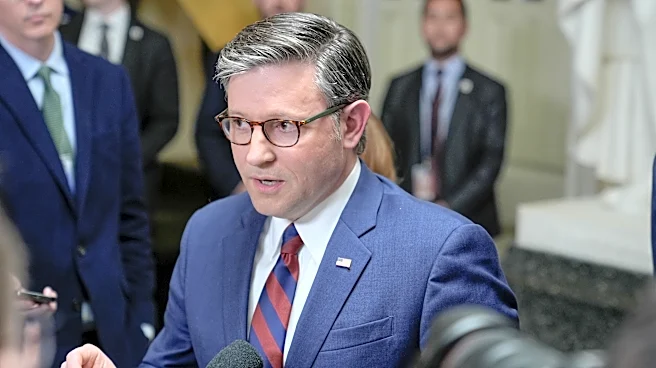
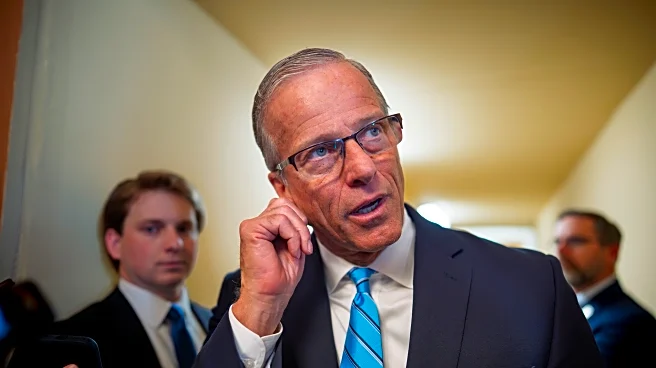
House Speaker Mike Johnson has rejected a Senate-approved bill intended to fund the Department of Homeland Security (DHS) amid a partial government shutdown. The Senate's proposal aimed to finance all of DHS, excluding Immigration and Customs Enforcement
(ICE) and parts of Customs and Border Protection. However, Johnson criticized the bill as a 'joke' and instead, House Republicans passed their own measure to fund the department for eight weeks. This decision has left the nation's airports in disarray, despite President Trump signing an executive order to pay TSA agents. The shutdown has persisted, with the House and Senate unable to reach a consensus, leading to a blame game between Republicans and Democrats. Republicans accuse Democrats of refusing to fund ICE without more accountability, while Democrats argue they are willing to fund all of DHS except ICE.
Why It's Important?
The ongoing government shutdown has significant implications for national security and public convenience, particularly affecting airport operations. The refusal to pass the Senate's funding bill highlights a deep political divide, with House Republicans opposing a bipartisan solution supported by Senate Republicans. This situation places additional pressure on Speaker Johnson, who faces internal party challenges and the potential for political fallout. The shutdown's continuation could lead to increased public frustration and economic repercussions, particularly in the travel sector. The political maneuvering also underscores the complexities of immigration policy and its impact on federal funding decisions.
What's Next?
The resolution of the government shutdown remains uncertain, with both the House and Senate at an impasse. The political dynamics within the Republican Party, particularly the influence of the House Freedom Caucus, will play a crucial role in determining the next steps. Speaker Johnson's leadership is under scrutiny, as he navigates the demands of his party's far-right faction while attempting to maintain his position. The potential for a prolonged shutdown could lead to further economic disruptions and increased political pressure on both parties to reach a compromise.