







What's Happening?
The World Food Programme (WFP), the largest humanitarian organization globally, has approved a new Nutrition Strategy for 2024 aimed at achieving zero hunger through improved nutrition. This strategy emphasizes the prevention and treatment of all forms
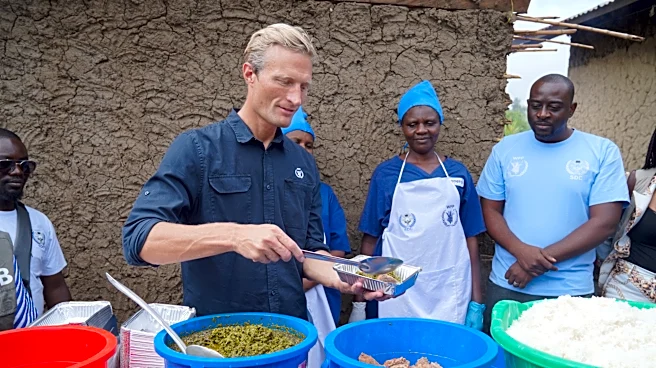
of malnutrition, with a significant focus on addressing micronutrient deficiencies worldwide. WFP plans to enhance its food assistance programs by incorporating food fortification strategies, which have proven effective in increasing vitamin and mineral intake among populations. The organization is committed to providing technical assistance to farmers and millers, leveraging its purchasing power to increase demand for fortified foods, and collaborating with governments and academic institutions to develop standards and advocate for fortification.
Why It's Important?
The WFP's new strategy is crucial in addressing the persistent issue of malnutrition, which affects millions globally, particularly in regions like Eastern and Southern Africa. By focusing on food fortification, WFP aims to tackle micronutrient deficiencies that pose serious public health challenges, especially for women and children. This initiative not only supports global health but also contributes to economic stability by improving the workforce's health and productivity. The strategy's success could lead to significant advancements in public health policies and food security, influencing other humanitarian and governmental organizations to adopt similar approaches.
What's Next?
WFP will implement its regional food fortification strategy in Eastern and Southern Africa, providing continuous technical support to country offices for planning, designing, and monitoring food fortification programs. The organization will also engage in regional advocacy and resource mobilization to sustain its fortification efforts. As WFP positions itself as a key technical agency in food fortification, it will likely influence policy decisions and program designs at both regional and national levels, potentially leading to broader adoption of fortified foods in humanitarian and government-led programs.