





What's Happening?
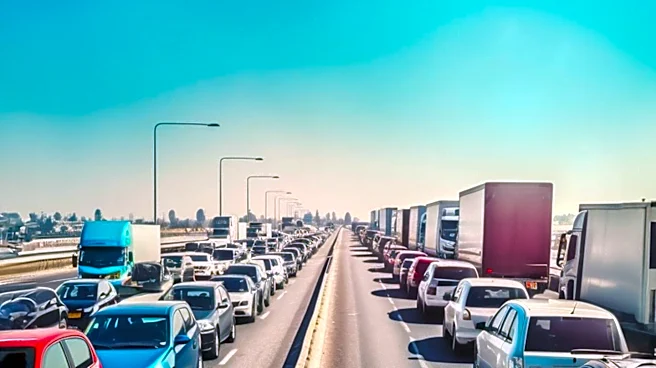
An early morning crash on M-14 near Interstate 275 caused significant traffic disruptions in the Plymouth area of Michigan. The Michigan Department of Transportation reported that the incident occurred at approximately 5:37 a.m., leading to the closure
of all westbound lanes between Exit 20/Sheldon Road and I-275. This closure created substantial backups, as observed on MDOT traffic cameras near Schoolcraft Road. A second crash subsequently occurred at around 6:13 a.m., resulting in the closure of all eastbound lanes of M-14 at Sheldon Road. Both incidents severely impacted commuter traffic during the morning rush hour, with lanes remaining closed for an extended period. CBS News Detroit is providing ongoing updates as the situation develops.
Why It's Important?
Traffic incidents like the one on M-14 have a significant impact on daily life and the local economy. Commuters face delays, leading to missed appointments, reduced productivity, and increased stress. For businesses, disrupted transportation routes can affect supply chains, delivery schedules, and employee punctuality. The closures also place a strain on emergency services, requiring rapid response and coordination to manage the accident scenes and redirect traffic. Furthermore, such events highlight the critical role of infrastructure maintenance and traffic management systems in ensuring smooth and safe travel. Frequent or severe traffic snarls can also influence urban planning decisions, prompting discussions about road capacity, alternative transportation methods, and accident prevention strategies.
What's Next?
Authorities are expected to continue their investigation into the cause of the crashes, which may lead to reports on contributing factors such as weather conditions, driver behavior, or vehicle malfunctions. Traffic management officials will work to clear the roadways and restore normal traffic flow as quickly as possible, potentially implementing temporary detours or alternative routes. In the aftermath, there may be discussions among local and state transportation departments about measures to prevent similar incidents, such as improved signage, road design modifications, or increased law enforcement presence. For affected drivers, the immediate next steps involve navigating the delays and seeking alternative routes, while insurance claims and vehicle repairs will follow for those directly involved in the accidents.
Beyond the Headlines
Beyond the immediate traffic disruptions, this incident underscores the broader challenges of urban mobility and infrastructure resilience in the U.S. It highlights the vulnerability of transportation networks to unforeseen events and the ripple effects these can have on regional economies and daily routines. The reliance on personal vehicles for commuting in many areas means that road closures can disproportionately impact a large segment of the population. This event could also reignite conversations about investing in public transportation alternatives and smart traffic management technologies to reduce congestion and improve response times to incidents. The psychological toll of prolonged traffic delays on commuters, including increased stress and reduced quality of life, is another less obvious but significant implication of such events.