





What's Happening?
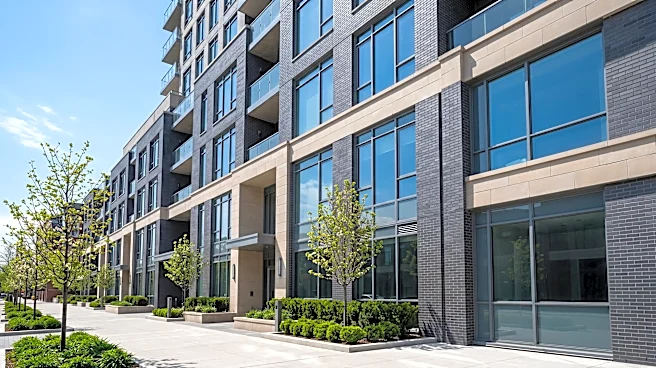
Worcester, Massachusetts, has officially opened Altitude Worcester, a $73 million redevelopment project that transformed the former Fallon Health offices at One Chestnut Place into 198 market-rate apartments. This project, described as the largest office-to-housing
conversion in Massachusetts, features 74 studio units, 84 one-bedroom apartments, and 40 two-bedroom apartments, ranging from 404 to 1,211 square feet. The first tenants moved in at the beginning of September. Additionally, 22 affordable condominium units have been developed next door at Two Chestnut Place, marking the city's first new downtown homeownership opportunity in over a decade. The city is also advancing proposals for another 323 apartments near Indian Lake, Coes Pond, and Lincoln Plaza, indicating a continued focus on expanding its housing supply.
Why It's Important?
This development is significant for Worcester as it addresses the growing demand for housing, particularly in the downtown area, by repurposing underutilized commercial spaces. The conversion of office buildings into residential units helps to revitalize urban centers, increase population density, and support local businesses. The inclusion of affordable condominiums alongside market-rate apartments also aims to create a more diverse and accessible housing market, catering to various income levels. This trend of adaptive reuse can serve as a model for other U.S. cities facing similar challenges of vacant office spaces and housing shortages, demonstrating a sustainable approach to urban development and economic growth. The project's financing, including a Community Conversion Tax Credit from the Massachusetts Executive Office of Housing and Livable Communities and a city tax incentive, highlights the role of public-private partnerships in facilitating such large-scale urban renewal efforts.
What's Next?
The Worcester City Council's Standing Committee on Economic Development has unanimously recommended a zoning change for a long-vacant property at 25 West Chester St., near Indian Lake, to facilitate the conversion of a deteriorating building into 40 apartments. This proposal will now go to the full city council for approval, and if passed, will require further permits from the Zoning Board of Appeals and site plan review by the Planning Board. Additionally, plans for a seven-building development offering 255 multifamily units along Coes Pond at 195 Mill St. are proceeding, with the developer seeking a special permit and variances. Another proposal for a five-story, 28-unit apartment development near Lincoln Plaza is also scheduled for review by the Planning Board. These ongoing projects indicate a sustained effort by Worcester to expand its housing inventory through both new construction and adaptive reuse.
Beyond the Headlines
The successful conversion of the former Fallon Health offices into Altitude Worcester underscores a broader shift in urban planning and real estate development, where sustainability and efficient land use are becoming paramount. By transforming existing structures rather than always building anew, cities can reduce their environmental footprint, preserve historical architecture, and create vibrant, mixed-use neighborhoods. This approach also addresses the economic challenge of declining demand for traditional office spaces in a post-pandemic world, turning potential liabilities into community assets. The emphasis on amenities like rooftop decks, fitness centers, and coworking spaces within these new residential developments reflects evolving lifestyle preferences, particularly among younger generations and urban professionals who seek convenience and community within their living environments. This trend could lead to a redefinition of urban living, where residential and commercial functions are increasingly integrated.