



What's Happening?
NASA is re-evaluating and simplifying the requirements for its next-generation lunar spacesuits, developed by Axiom Space, to prevent equipment development from delaying the initial Artemis Moon landings. This strategic shift involves studying a 'Sortie'
version of Axiom Space's AxEMU spacesuit, which would be a less complex configuration designed for shorter-duration lunar operations rather than the extensive requirements of long-term exploration. The decision follows discussions within NASA’s Aerospace Safety Advisory Panel, where member Charlie Precourt noted that requirements are being adjusted to reflect near-term mission needs, including shortening spacesuit certification durations. Axiom Space's president and chief executive, Jonathan Cirtain, confirmed that the company is adapting its spacesuit to meet these specific objectives, focusing on identifying components and capabilities that can be reduced without compromising safety for initial missions. This approach aims to streamline the certification process and accelerate the timeline for astronauts to return to the lunar surface.
Why It's Important?
This adjustment in NASA's spacesuit strategy is crucial for the progression of the Artemis program, which aims to return humans to the Moon. By prioritizing immediate mission needs over long-term exploration standards for the initial lunar suits, NASA can potentially avoid significant delays and cost overruns associated with developing a fully capable, all-encompassing spacesuit from the outset. This pragmatic approach allows for a faster deployment of essential equipment, enabling earlier lunar landings and maintaining momentum for the program. For Axiom Space, this means a more focused development pathway, potentially leading to quicker product delivery and operational testing. The success of this revised strategy could set a precedent for future space exploration programs, emphasizing adaptability and phased development to meet critical timelines. Conversely, any miscalculation in the simplified suit's capabilities could pose risks to astronaut safety or limit the scope of early lunar missions.
What's Next?
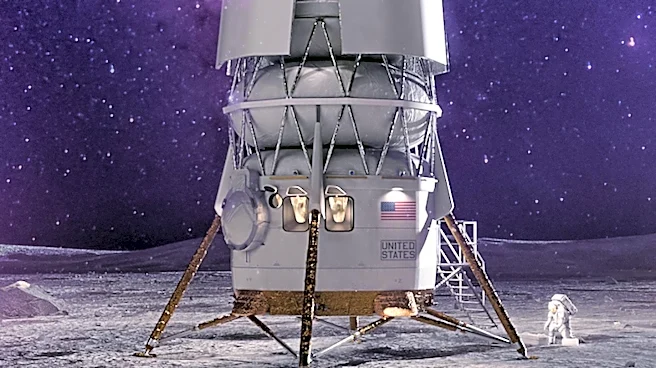
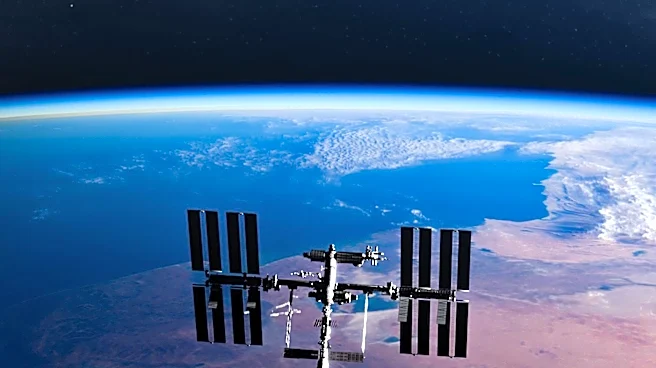
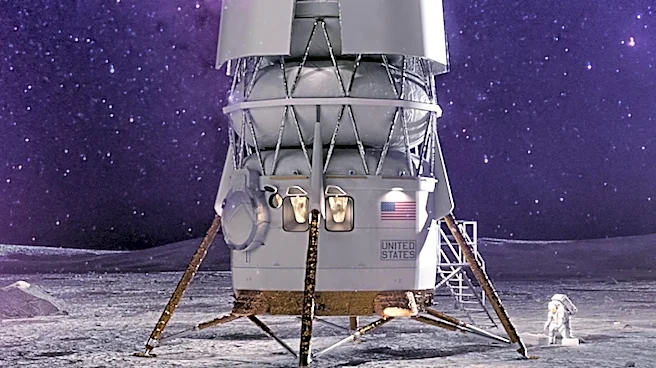
Axiom Space plans to deliver a qualification version of the AxEMU spacesuit to NASA before the end of 2026 for testing. A critical test is scheduled for 2027, involving a spacewalk outside the International Space Station (ISS) where one astronaut will wear the Axiom spacesuit alongside another in a standard NASA suit. This test will evaluate the new equipment's performance in a real space environment. Additionally, Axiom Space is exploring the possibility of flying a version of the spacesuit, likely an engineering model, aboard Artemis 3, potentially inside Blue Origin’s Blue Moon lunar lander. This would allow for data collection on how the equipment tolerates launch stresses and provide astronauts an opportunity to practice donning and doffing the suit in a confined space. The exact activities and crew members for these tests are yet to be specified by NASA, and the overall schedule remains dependent on NASA’s operational decisions and the ongoing progress of spacesuit development.
Beyond the Headlines
The collaboration between Axiom Space and Prada, an Italian luxury fashion company, highlights an unexpected but significant aspect of modern space technology development. Prada's expertise in materials, garment construction, and design is being leveraged for elements like the spacesuit's cooling and ventilation undergarment. This partnership underscores a growing trend in aerospace where specialized knowledge from diverse industries is integrated to solve complex engineering challenges. The need for effective thermal regulation and astronaut comfort within an insulated suit in the vacuum of space necessitates innovative solutions, and Prada's involvement demonstrates how cross-industry collaboration can lead to advancements in human-performance requirements for space exploration. This interdisciplinary approach could redefine how future space equipment is designed and manufactured, blending high-tech engineering with specialized design and material science from seemingly unrelated fields.