








What's Happening?
Aurora, Illinois, has enacted new regulations for data centers following a 180-day moratorium on new facilities. The city, which currently hosts five data centers, developed these requirements to guide developers and protect residents. Aurora Sustainability
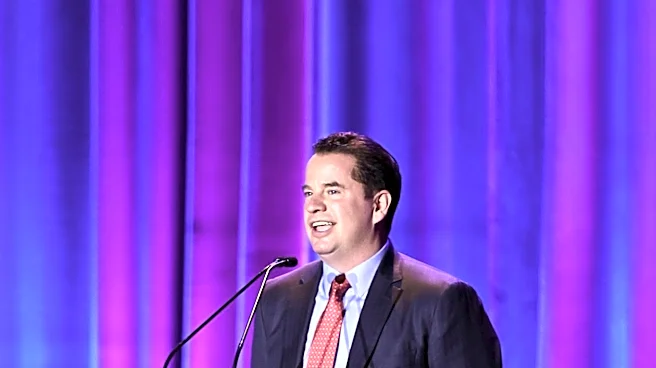
Director Alison Lindburg highlighted that the new regulations, passed on March 24, include conditional use zoning, requiring public hearings, water studies, energy plans, and sound studies. The ordinance also sets day and nighttime noise limits, vibration limits, and restrictions on energy consumption and water use. Notably, it prohibits data centers from establishing nuclear energy sources and using evaporating water for cooling. Former Illinois state representative Steve Andersson praised Aurora's proactive approach, emphasizing the importance of preventing accidental permitting of data centers through special use and conditional zoning to avoid potential negative impacts on communities.
Why It's Important?
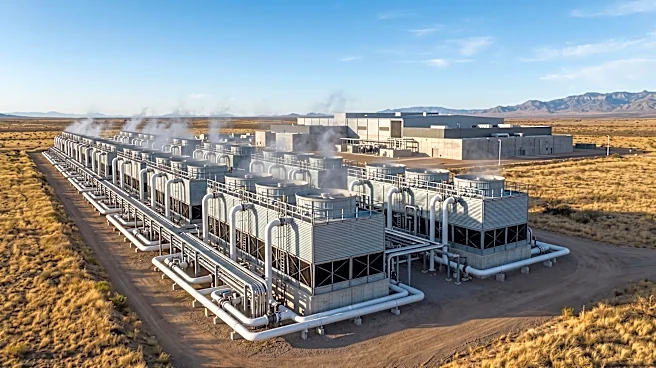
Aurora's new regulations are significant as they address growing concerns about the environmental and economic impact of data centers on local communities. Data centers are massive consumers of electricity and water; some can use up to 5 million gallons of water per day, equivalent to the needs of a town of 10,000 to 50,000 people. With 80% of their power often derived from fossil fuels, their increasing energy demand poses challenges to greenhouse gas emission reduction goals. Aurora experienced a 24% increase in electric costs in 2025, partly attributed to data centers. While data centers can generate substantial utility taxes for municipalities—a 100-megawatt center can bring in around $1 million annually—their resource consumption and potential impact on utility costs for residents necessitate careful regulation. This move by Aurora sets a precedent for other Illinois communities grappling with similar issues.
What's Next?
The Illinois Commerce Commission is currently exploring frameworks for very large electricity users like data centers, indicating a potential for broader state-level regulations. Several state bills are pending, including Senate Bill 2181, which aims to create the Illinois Data Center Energy and Water Reporting Act to track resource consumption. Additionally, Senate Bill 4016 and House Bill 5513, known as the POWER Act, seek to ensure data centers pay their fair share of costs, preventing additional electric burdens on consumers. As the global data center market is projected to exceed $1 trillion in eight years, more municipalities may follow Aurora's lead in implementing stringent regulations. Communities will likely continue to advocate for policies that balance economic benefits with environmental protection and fair utility costs for residents, potentially leading to a more standardized approach to data center development across the state.
Beyond the Headlines
The regulation of data centers in Aurora touches upon deeper implications concerning sustainable urban development and the digital economy. The rapid expansion of data centers, driven by increasing reliance on digital services, presents a paradox: while essential for modern life, they exert significant environmental pressure. This situation highlights the ethical responsibility of municipalities to balance technological advancement with ecological stewardship and community well-being. The debate over data center regulation also underscores the need for transparent energy and water consumption reporting, pushing for greater accountability from large industrial users. Furthermore, it prompts a re-evaluation of zoning laws to prevent unintended consequences, ensuring that industrial classifications adequately differentiate between various types of facilities. This local action in Aurora reflects a growing national conversation about how to integrate high-tech infrastructure responsibly into existing communities, addressing concerns about resource depletion, climate impact, and equitable distribution of costs.