



What's Happening?
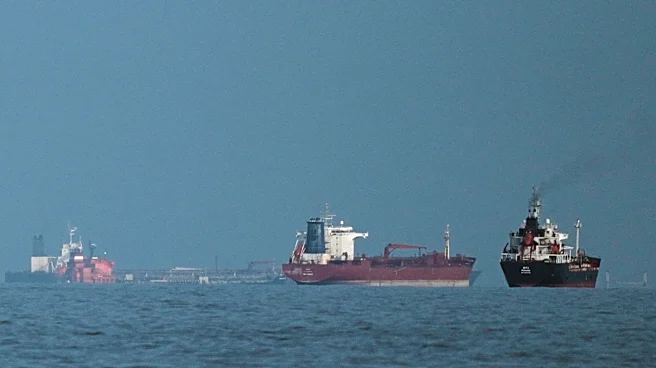
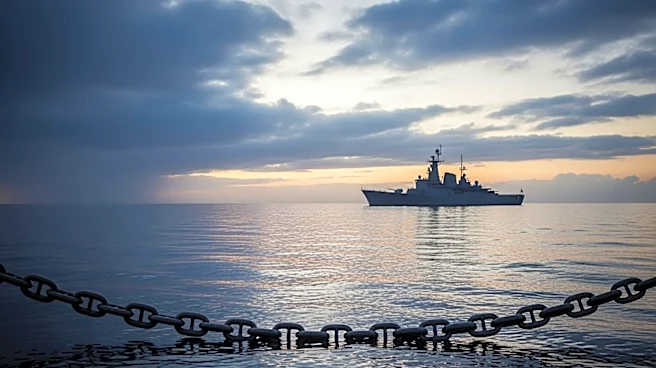
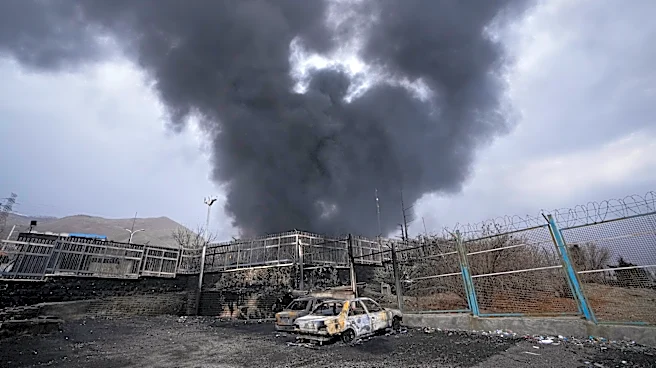
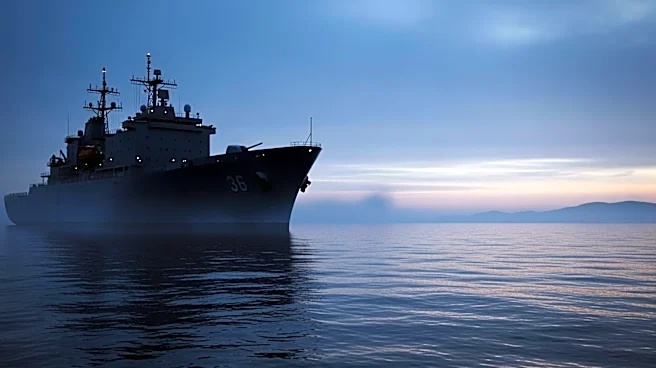
President Trump announced that a naval blockade on Iranian ports will commence, escalating pressure on Tehran after failed negotiations. The blockade is part of a broader strategy to force Iran back to the negotiating table under less favorable conditions.
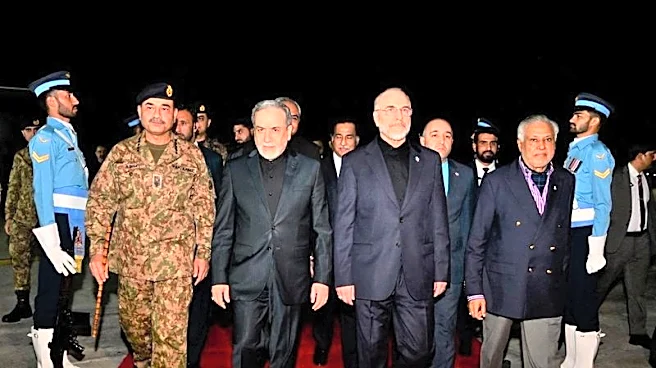
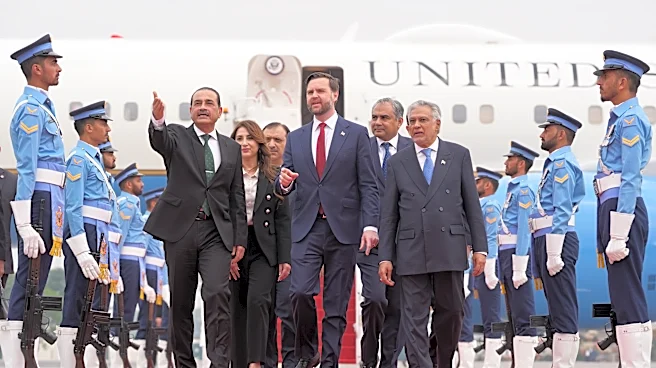
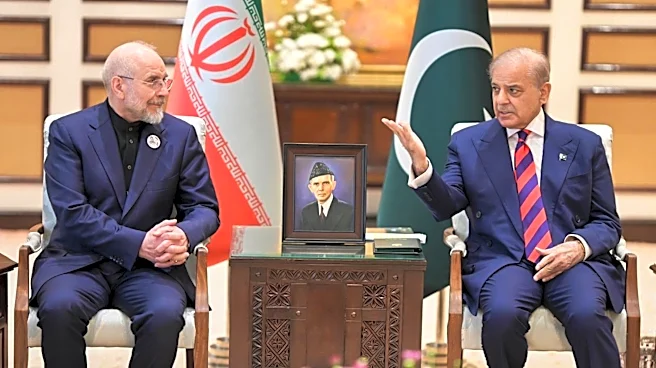
The U.S. aims to increase economic pressure by targeting Iran's oil exports and access through the Strait of Hormuz. Diplomatic efforts continue, with Pakistan mediating between the U.S. and Iran to preserve the ceasefire.
Why It's Important?
The blockade represents a significant escalation in U.S.-Iran tensions, with potential impacts on global oil markets and regional stability. By targeting Iran's economic lifeline, the U.S. hopes to compel Iran to negotiate on terms more favorable to Washington. However, the move risks further destabilizing the region and could lead to military confrontations. The situation highlights the complexities of international diplomacy and the potential consequences of economic and military pressure tactics.
What's Next?
The blockade is set to begin, with the U.S. prepared to enforce it rigorously. Diplomatic channels remain open, with Pakistan and other regional players working to facilitate dialogue. The international community will be watching closely, as the blockade's impact on global oil prices and regional security could be significant. The U.S. and Iran must navigate these tensions carefully to avoid further escalation and find a path to peaceful resolution.