







What's Happening?
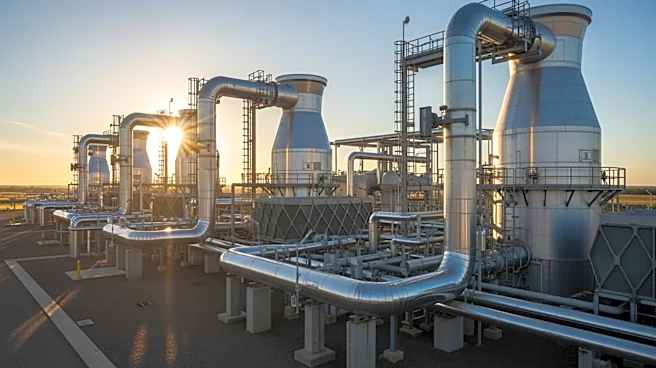
Rayburn Electric Cooperative has commenced construction on a new 570-megawatt natural gas-fired power plant, named Rayburn Electric Station II, in Sherman, Texas. This development is part of Texas's strategy to enhance its supply of dispatchable electricity.
The new facility is designed to operate as a peaker plant, capable of reaching full power within 10 minutes during high electricity demand periods. The project is supported by the Texas Energy Fund, a loan program established by state legislators in 2023 to encourage the construction of new power plants. This initiative was a response to the 2021 Winter Storm Uri, which caused widespread power outages and fatalities. The plant is expected to be operational by June 2028 and will serve the Electric Reliability Council of Texas' north load zone.
Why It's Important?
The construction of the Rayburn Electric Station II is significant as it addresses the need for reliable power supply in Texas, particularly in the wake of past power shortages like those experienced during Winter Storm Uri. By increasing the state's dispatchable electricity capacity, the project aims to prevent future outages and support the growing energy demands of Texas's population and economy. The plant's ability to quickly ramp up power generation will help stabilize the grid during peak demand times, contributing to energy security and resilience. This development also reflects broader efforts to modernize and expand the state's energy infrastructure, potentially influencing energy policy and investment in similar projects.
What's Next?
As the construction of Rayburn Electric Station II progresses, stakeholders will likely monitor its impact on the local energy market and grid stability. The Texas Energy Fund's support for this project may encourage further applications for new power generation facilities, with six additional projects currently under review. The successful implementation of Rayburn II could set a precedent for future energy infrastructure projects in Texas, potentially influencing legislative and regulatory approaches to energy development. Additionally, the project's completion will be closely watched by communities and businesses reliant on stable power supply, as well as investors interested in the state's energy sector.