



What's Happening?
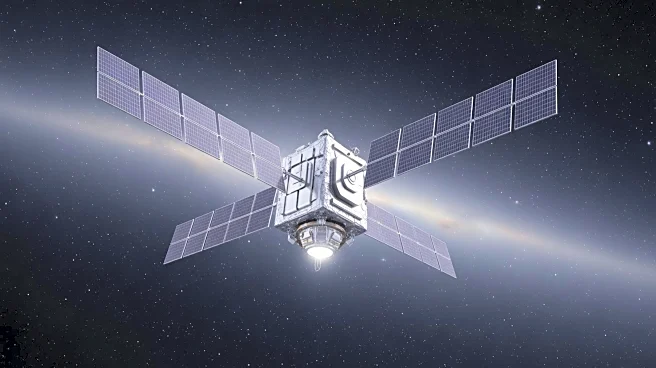
SpaceX is set to launch NASA's Pandora satellite on January 11, 2026, from Vandenberg Space Force Base in California. The satellite, part of a mission to study exoplanet atmospheres, will use a 17-inch telescope to observe at least 20 known exoplanets
as they transit their host stars. This mission aims to disentangle the complex signals from exoplanet atmospheres and their stars, providing insights into atmospheric composition and stellar activity.
Why It's Important?
The Pandora mission represents a significant step forward in exoplanet research, offering the potential to enhance our understanding of planetary atmospheres beyond our solar system. By analyzing the light spectra from these transits, scientists can gain valuable information about the chemical makeup of exoplanet atmospheres, which is crucial for assessing their habitability and understanding planetary formation processes.
What's Next?
Following the launch, Pandora will conduct a yearlong mission to gather data on exoplanet atmospheres. The mission's success could pave the way for future exoplanet studies, potentially leading to the discovery of Earth-like planets and advancing our knowledge of the universe.