






What's Happening?
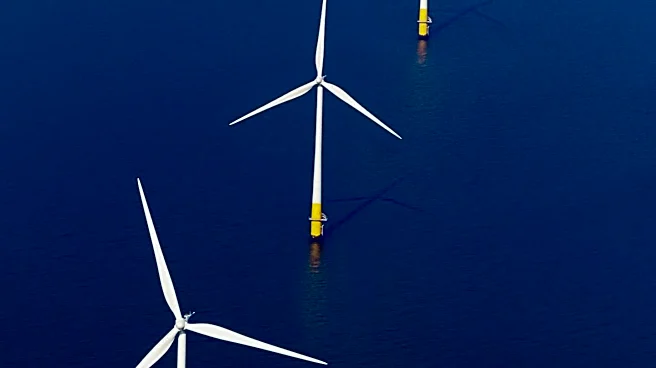
The United States is experiencing significant pipeline activity in offshore wind development, particularly along its East Coast and the Gulf of Mexico. This growth is part of a broader global trend where the Asia-Pacific region is expanding offshore wind capacity
faster than any other part of the world, with China leading in installed capacity. While Europe remains a mature market, countries in Southeast Asia, the Middle East, and North America are rapidly scaling up their offshore wind initiatives. China's dominance is attributed to government targets, domestic supply chains, and competitive turbine manufacturing. European nations like the UK, Germany, Denmark, and the Netherlands continue to commission large-scale projects, pushing advancements in deep-water and floating wind technology. The U.S. is in an earlier stage of development but is actively pursuing projects to expand its offshore wind footprint.
Why It's Important?
The expansion of offshore wind capacity in the U.S. is crucial for diversifying the nation's energy portfolio, reducing reliance on fossil fuels, and contributing to climate change mitigation goals. This development can stimulate economic growth through job creation in manufacturing, installation, and maintenance sectors. It also fosters technological innovation in renewable energy. For industries, it presents opportunities for investment and supply chain development, particularly in coastal regions. The U.S. stands to gain from the lessons learned by more mature markets in Europe and the rapid scaling seen in Asia-Pacific, potentially accelerating its own development. However, challenges remain in establishing robust regulatory frameworks, grid infrastructure, and a skilled workforce, which are critical for attracting investment and ensuring timely project completion. The success of U.S. offshore wind projects will impact energy security, environmental sustainability, and economic competitiveness.
What's Next?
The U.S. is expected to continue its efforts in developing supportive government policies, streamlining permitting processes, and improving grid connection rules to attract further investment in offshore wind. There will likely be increased focus on building out domestic supply chains and training a specialized workforce to meet the growing demand for technical professionals, including marine crew, installation engineers, and electrical specialists. Collaboration with international partners, particularly those with advanced deep-water and floating wind technologies, could accelerate U.S. development. Emerging markets globally, including India, Brazil, Saudi Arabia, and South Africa, are also moving from feasibility studies to active tendering and early-stage construction, indicating a sustained global demand for offshore wind expertise and resources. The U.S. will need to navigate its unique regulatory and environmental considerations to ensure successful project implementation.
Beyond the Headlines
The push for offshore wind in the U.S. extends beyond energy production, touching upon broader themes of national infrastructure development and environmental stewardship. The successful integration of large-scale offshore wind farms requires significant upgrades to existing grid infrastructure and the development of new transmission capabilities, which can be a complex and costly undertaking. Furthermore, the environmental impact of offshore wind farms on marine ecosystems, including potential effects on wildlife and fishing industries, will require careful consideration and mitigation strategies. The development also highlights the ethical dimension of energy transition, balancing economic benefits with ecological preservation. Long-term, the U.S. offshore wind sector could become a significant player in the global renewable energy landscape, influencing international standards and fostering a new era of energy independence and sustainability.