





What's Happening?
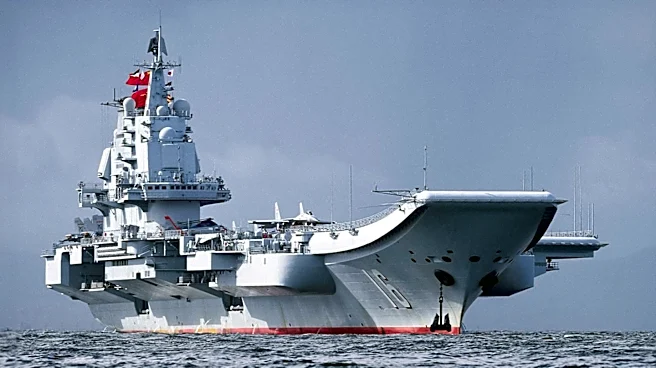
Taiwan's Ministry of National Defense reported detecting 21 Chinese military aircraft, eight naval vessels, and eight official ships operating around Taiwan between November 4 and 5. According to the ministry, 19 of these aircraft approached Taiwan’s
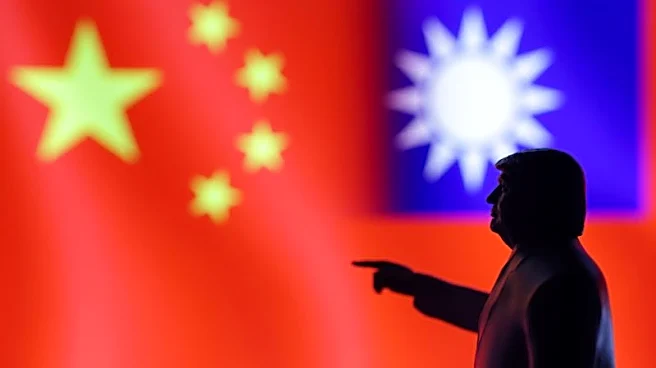
main island. This activity follows a previous surge in Chinese military operations around Taiwan on Tuesday. The Taiwanese military is closely monitoring the situation, indicating ongoing vigilance regarding China's military presence in the region. The report highlights a consistent pattern of Chinese military incursions, which Taiwan views as a form of 'grey zone' warfare designed to test its defenses and assert claims over the self-governed island.
Why It's Important?
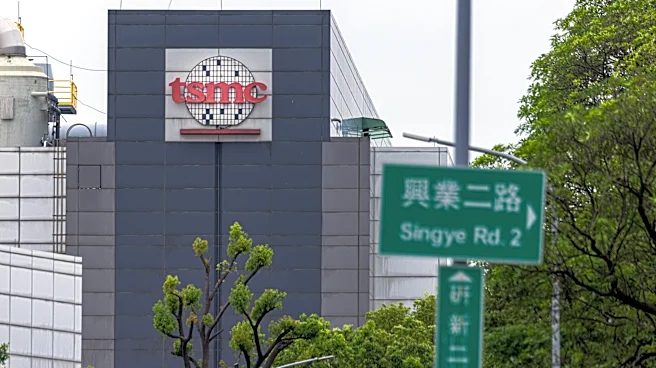
The increased Chinese military activity near Taiwan is significant as it escalates tensions in a strategically vital region. For the U.S., which maintains an unofficial but robust relationship with Taiwan and is committed to its defense capabilities, these actions pose a direct challenge to regional stability and international norms. The continuous presence of Chinese aircraft and vessels near Taiwan could be seen as a coercive tactic, aiming to intimidate Taiwan and potentially alter the status quo in the Taiwan Strait. This situation impacts U.S. foreign policy, defense strategy in the Indo-Pacific, and economic interests, particularly given Taiwan's critical role in the global semiconductor supply chain. Any conflict in the region could have severe global economic repercussions and draw the U.S. into a direct confrontation.
What's Next?
Taiwan's military will likely continue its heightened surveillance and readiness in response to ongoing Chinese military movements. The U.S. is expected to reiterate its commitment to Taiwan's self-defense and potentially increase its military presence or exercises in the Indo-Pacific to deter further Chinese aggression. International bodies and allied nations may also issue statements condemning the provocative actions, urging de-escalation. The long-term trajectory points towards continued military modernization and strategic posturing by both China and Taiwan, with the U.S. and its allies closely observing and responding to maintain a balance of power in the region. Future developments could include more frequent or larger-scale Chinese military drills, further testing Taiwan's and its allies' resolve.
Beyond the Headlines
Beyond the immediate military posturing, these events underscore a deeper geopolitical struggle for influence in the Indo-Pacific. China's actions are part of a broader strategy to assert its sovereignty claims over Taiwan and project power in the region, challenging the existing U.S.-led security architecture. The 'grey zone' tactics employed by China, which fall short of outright warfare but are designed to exert pressure, raise complex questions about international law and the thresholds for intervention. This ongoing tension also highlights the critical importance of Taiwan's democratic governance and its right to self-determination, which are core values supported by the U.S. and its allies. The situation could also accelerate the diversification of global supply chains away from Taiwan, impacting industries reliant on its advanced manufacturing capabilities.