






What's Happening?
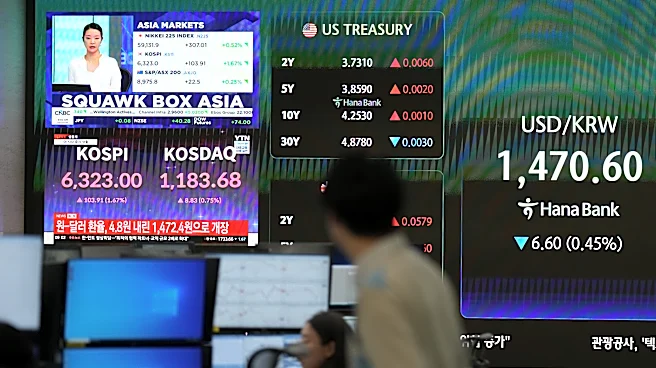
Oil prices experienced a slight decline on Thursday due to ongoing stalled peace talks between the United States and Iran, coupled with continued restrictions on shipping through the Strait of Hormuz. Brent crude futures decreased by 15 cents to $101.76
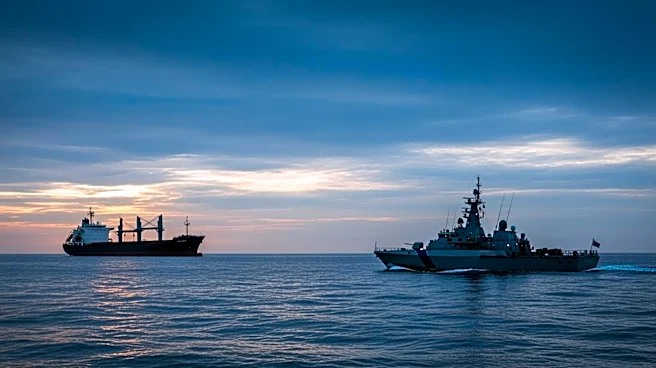
a barrel, while West Texas Intermediate futures fell by 14 cents to $92.82. This decline follows a significant increase in prices the previous day, driven by larger-than-expected draws in U.S. gasoline and distillate stocks. Despite President Trump's extension of a ceasefire, both nations continue to impose restrictions on the strategic Strait of Hormuz, a critical passage for global oil and liquefied natural gas supplies. The U.S. military has intercepted Iranian-flagged tankers, redirecting them away from key Asian waters, while Iran has seized two ships in the Strait, further tightening control over the waterway.
Why It's Important?
The ongoing tensions between the U.S. and Iran, particularly concerning the Strait of Hormuz, have significant implications for global oil markets. The Strait is a vital chokepoint, carrying about 20% of the world's daily oil and liquefied natural gas supplies. Any disruption in this region can lead to volatility in oil prices, affecting global energy markets and economies reliant on oil imports. The U.S. and Iran's actions, including military interventions and shipping restrictions, contribute to market uncertainty, impacting oil prices and potentially leading to increased costs for consumers and industries worldwide. The situation underscores the geopolitical risks associated with energy supply routes and the broader implications for international trade and economic stability.
What's Next?
The future of oil prices and shipping through the Strait of Hormuz largely depends on the progress of peace talks between the U.S. and Iran. If negotiations remain stalled, continued military and shipping restrictions could further disrupt global oil supplies, leading to sustained price volatility. Stakeholders, including oil-importing nations and energy companies, will closely monitor developments, potentially adjusting their strategies to mitigate risks associated with supply disruptions. Additionally, diplomatic efforts by other nations, such as Pakistan's mediation, may play a crucial role in facilitating dialogue and easing tensions, which could stabilize the situation and restore normalcy to global oil markets.