






What's Happening?
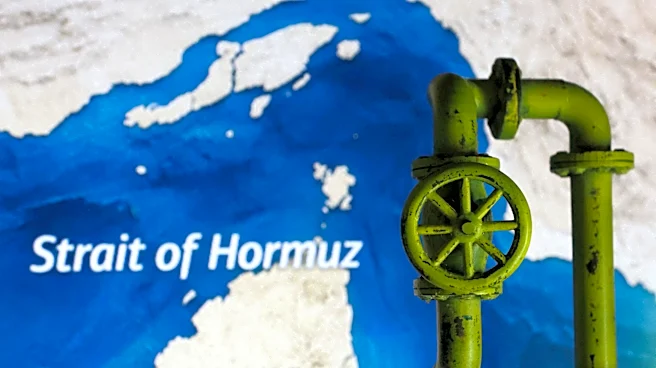
President Trump has recently reversed a decision to impose fees on ships passing through the Strait of Hormuz, a critical maritime chokepoint for global energy trade. This decision comes amidst ongoing tensions between the United States and Iran, with
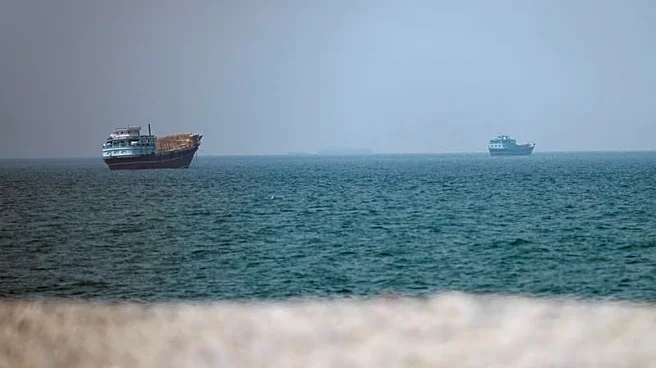
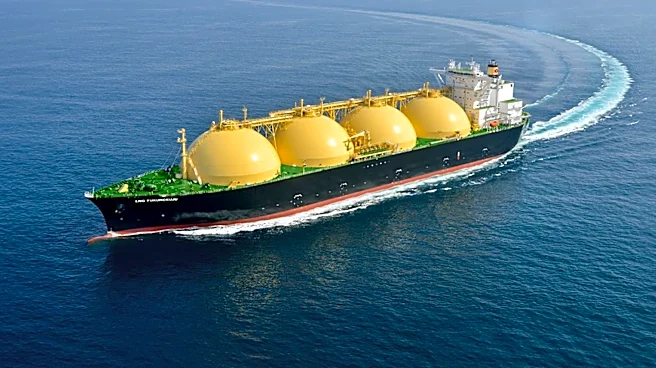
the U.S. continuing to sanction Iranian oil sales and conduct missile strikes. The Strait of Hormuz is a vital passageway, with a fifth of the world's oil and gas transiting through it. Control over this strait is seen as both a significant revenue opportunity and a strategic economic lever. The situation remains fluid, with the U.S. and Iran engaged in a complex geopolitical struggle over this crucial waterway.
Why It's Important?
The Strait of Hormuz is a pivotal point in global energy logistics, and any disruption can have far-reaching implications for international oil markets and energy security. President Trump's fluctuating policies towards Iran, including the recent cancellation of the fee plan, highlight the volatility and unpredictability in U.S.-Iran relations. Control over the strait not only affects energy prices but also has broader economic and geopolitical consequences. Countries reliant on oil imports through this route could face increased costs and supply uncertainties, impacting global economic stability.
What's Next?
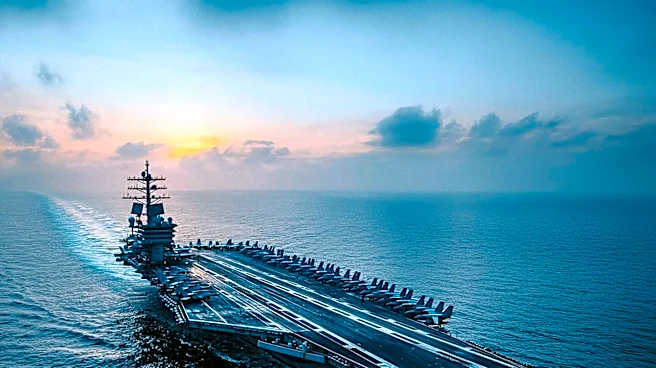
The ongoing tensions suggest that further developments are likely, with potential for both diplomatic negotiations and military confrontations. Stakeholders, including global oil markets and international shipping companies, will be closely monitoring the situation. The U.S. may continue to leverage economic sanctions and military presence in the region, while Iran might seek to assert its influence over the strait. The international community may also engage in diplomatic efforts to ensure the free flow of trade through this critical passage.