





What's Happening?
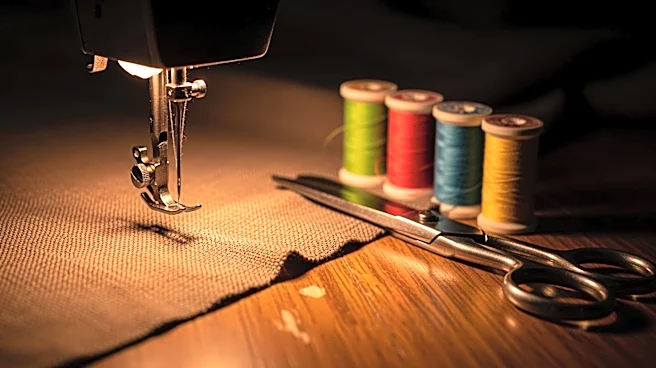
In the U.S., the demand for skilled tailors and dressmakers is increasing as many professionals in the field retire. Kil Bae, a tailor in Manhattan, exemplifies this trend as he continues to work on custom alterations despite the aging workforce. Bae, who
began his career in South Korea, is part of a shrinking group of skilled sewers, dressmakers, and tailors. The U.S. Bureau of Labor Statistics reports a 30% decline in the number of tailors over the past decade, with the median age of these workers being 54. The fashion industry is seeing a resurgence in demand for custom fits and alterations, driven by consumers seeking to personalize off-the-rack purchases and revive secondhand finds. Despite the growing need, the profession struggles to attract younger workers due to the physical demands and relatively low wages compared to other industries.
Why It's Important?
The decline in skilled tailors and dressmakers poses a challenge for the U.S. fashion industry, which relies on these professionals to meet consumer demand for custom clothing. As the workforce ages, there is a risk of losing the craftsmanship that is essential for high-quality garment alterations. This could impact retailers and consumers who value personalized fashion. The industry is attempting to address this shortage by launching training programs, such as Nordstrom's collaboration with the Fashion Institute of Technology, to cultivate a new generation of tailors. However, the profession's physical demands and lower wages compared to other fields may continue to deter young entrants, potentially leading to a gap in skilled labor.
What's Next?
Efforts to attract new talent to the tailoring profession are underway, with initiatives like Nordstrom's training program aiming to prepare individuals for careers in garment alterations. Retailers are expanding their tailoring services to meet consumer demand, with companies like Brooks Brothers offering bespoke tailoring for women. The industry may need to further innovate and promote the value of tailoring as a viable career path to ensure the continuation of this essential craft. Additionally, there may be increased reliance on immigrant workers, who have historically played a significant role in the garment industry.
Beyond the Headlines
The tailoring profession highlights broader issues in the U.S. labor market, such as the challenges of sustaining skilled trades amid technological advancements and shifting consumer preferences. As artificial intelligence automates certain aspects of fashion production, the unique skills of tailors remain irreplaceable, emphasizing the importance of preserving traditional craftsmanship. The cultural significance of tailoring, which involves personal interaction and artistic expression, may also contribute to its enduring appeal despite economic pressures.