


What's Happening?
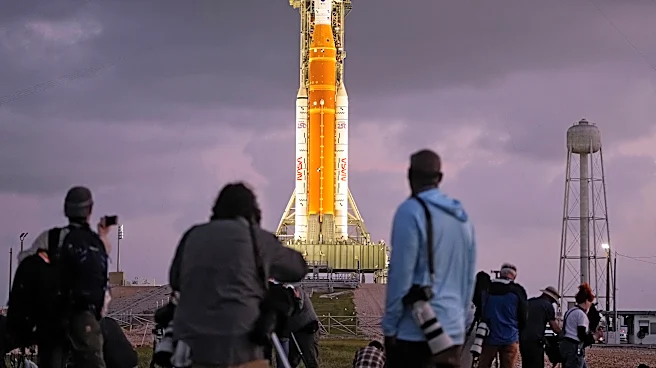
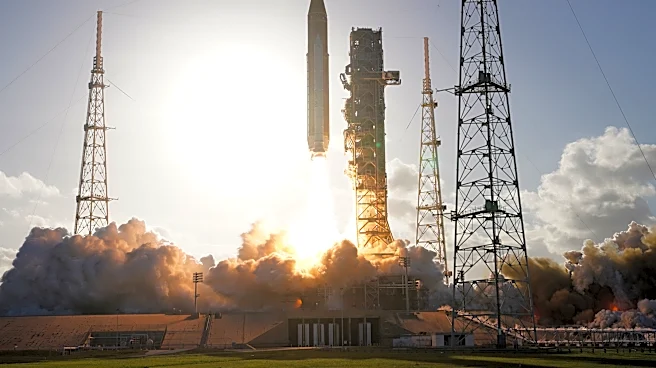
NASA has successfully launched the Artemis II mission, marking the first crewed flight around the Moon in over 50 years. The mission, which took off from Kennedy Space Center in Florida, involves four astronauts aboard the Orion spacecraft. This mission is a significant
step in human space exploration, aiming to test key systems and prepare for future missions that will establish a long-term human presence on the Moon. The crew includes NASA astronauts Reid Wiseman, Victor Glover, and Christina Koch, along with Canadian Space Agency astronaut Jeremy Hansen. The mission is expected to last about 10 days, during which the crew will conduct a lunar flyby and return to Earth.
Why It's Important?
The Artemis II mission is crucial for advancing human space exploration beyond Earth's orbit. It represents a pivotal moment in NASA's efforts to return humans to the Moon and eventually establish a sustainable presence there. This mission not only tests the capabilities of the Orion spacecraft but also sets the stage for future missions that could lead to human exploration of Mars. The success of Artemis II could have significant implications for scientific discovery, economic development, and international collaboration in space exploration.
What's Next?
Following the Artemis II mission, NASA plans to conduct more complex missions as part of the Artemis program. These future missions aim to establish a sustainable human presence on the Moon, which will serve as a stepping stone for human exploration of Mars. The success of Artemis II will inform the planning and execution of these subsequent missions, ensuring that the necessary systems and technologies are in place for long-term lunar exploration.