








What's Happening?
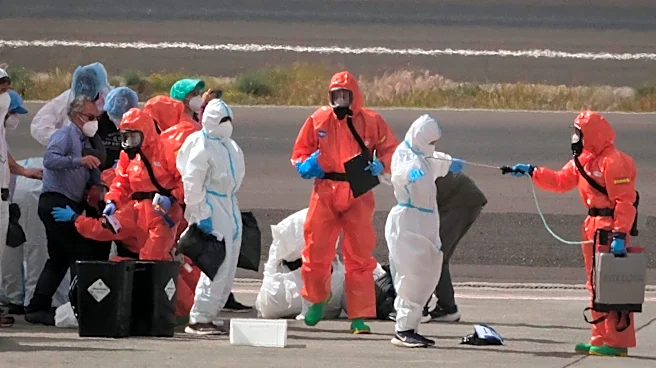
Governor Kathy Hochul announced that three New Yorkers are among 17 American passengers evacuated from a cruise ship affected by hantavirus. The passengers, including individuals from New York City, Orange County, and Westchester County, were brought
back to the United States for evaluation and quarantine at the National Quarantine Unit at the University of Nebraska Medical Center in Omaha. Two of the Americans have tested positive for the virus, with one showing symptoms. The passengers will undergo a 42-day monitoring period, during which they can choose to stay in Nebraska or return home for further accommodations. Hochul emphasized the importance of preparedness, given New York's dense population, while downplaying the likelihood of a COVID-19-like pandemic.
Why It's Important?
The evacuation and quarantine of these passengers highlight the ongoing challenges of managing infectious diseases in a globalized world. The hantavirus, with a high mortality rate, poses significant health risks, necessitating stringent monitoring and containment measures. This situation underscores the importance of rapid response and coordination between state and federal health authorities to prevent potential outbreaks. For New York, a state with a large and densely populated urban center, the incident serves as a reminder of the need for vigilance and preparedness in public health management. The response to this event could influence public confidence in health systems and impact future travel and tourism policies.
What's Next?
The evacuated passengers will continue to be monitored for six weeks to ensure they do not develop further symptoms of hantavirus. Health officials will need to maintain strict protocols to prevent any potential spread of the virus. Governor Hochul and other state leaders may need to reassess and strengthen public health strategies to address similar incidents in the future. Additionally, there may be increased scrutiny on cruise ship operations and their health safety measures, potentially leading to new regulations or guidelines to protect passengers and crew from infectious diseases.