



What's Happening?
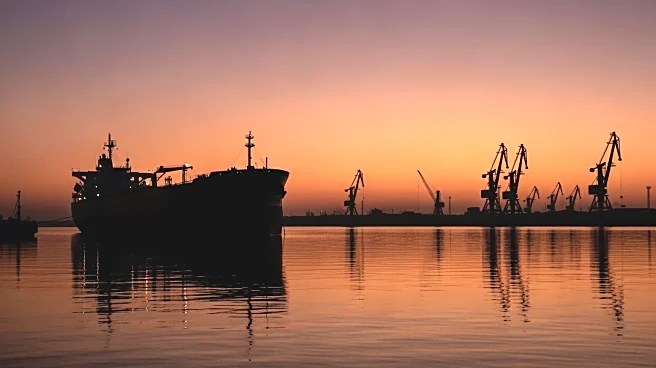
Turkey has announced the deployment of its drillship, Cagri Bey, to the waters off the coast of Somalia for an exploration and production project in the Arabian Sea. This move is part of a production sharing agreement between Turkey and Somalia, established
in 2024. The drillship, operated by Türkiye Petrolerii, will be escorted by Turkish naval ships to ensure security in the region, which is known for multiple threat actors and overlapping risks. The deployment follows a seismic survey conducted by Turkey's Oruc Reis ship in 2024, which gathered data for the drilling project. The Turkish government, under President Recep Tayyip Erdogan, aims to reduce its energy dependency on imports, particularly from Russia, by exploring new energy resources.
Why It's Important?
The deployment of the drillship highlights Turkey's strategic interest in expanding its energy resources and asserting its influence in the Horn of Africa. This move could potentially alter the geopolitical dynamics in the region, especially given the existing tensions between Turkish and Israeli interests. Israel's recent recognition of Somaliland as an independent nation has strained relations with the Somali federal government and its Turkish allies. Additionally, the presence of Turkish military forces in Somalia underscores Turkey's commitment to securing its interests in the region. The exploration project could provide significant economic benefits to Turkey by reducing its reliance on Russian energy imports, thereby enhancing its energy security.
What's Next?
The drilling operations are expected to commence in April, with Turkey's navy providing ongoing security. The success of this project could lead to further exploration and production activities in the region, potentially increasing Turkey's energy independence. However, the geopolitical tensions in the Horn of Africa, particularly with Israel and the ongoing al-Shabaab insurgency, could pose challenges to the project's progress. The international community will likely monitor these developments closely, as they could impact regional stability and energy markets.