







What's Happening?
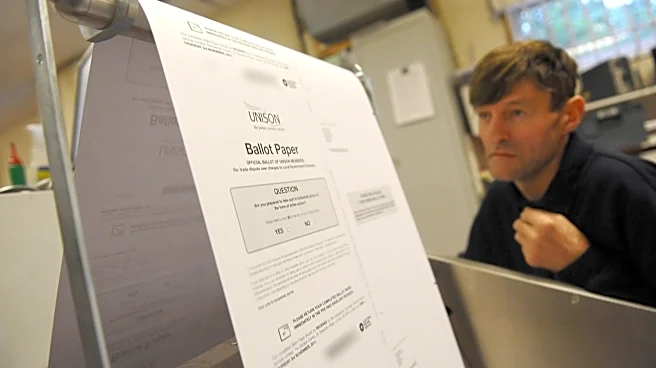
UNISON, a prominent union, has partially welcomed the Home Secretary's recent announcement regarding visa reforms. The union's General Secretary, Andrea Egan, stated that UNISON is pleased that some of the 'worst aspects' of the initial plans were not
implemented, attributing this to the union's campaign efforts and the organizing of migrant workers. However, UNISON continues to advocate for a sector-wide visa specifically for social care. Egan criticized the government's approach, describing the initial plans as 'morally bankrupt' and a 'threat to public services.' She emphasized the need to stop 'demonizing migrant workers' and instead acknowledge their contributions to the health and social care system. The union's 'Fair Visas Now' campaign aims to address issues such as exploitation and abuse faced by migrant care workers due to current visa systems that tie them to single employers.
Why It's Important?
This development is significant for the U.S. as it highlights ongoing debates surrounding immigration policies and their impact on essential services, particularly healthcare and social care. While the source focuses on the UK, similar discussions about migrant worker rights, visa structures, and labor shortages in critical sectors are prevalent in the U.S. The call for a sector-wide visa in social care underscores the recognition of migrant workers' vital role in filling labor gaps and supporting an aging population. The union's concerns about exploitation and the vulnerability of workers tied to single employers resonate with broader discussions in the U.S. regarding labor protections and ethical recruitment practices for foreign workers. The outcome of such policy debates can influence the availability and quality of care services, as well as the economic well-being of migrant communities.
What's Next?
UNISON's 'Fair Visas Now' campaign is set to continue, indicating ongoing advocacy for comprehensive reforms to visa policies affecting migrant workers in social care. The union will likely maintain pressure on the government to implement a sector-wide visa, which would offer greater flexibility and protection for these workers. Further discussions are anticipated regarding the criteria for indefinite leave to remain, particularly concerning continuous employment and salary thresholds for care workers. UNISON will also monitor how these changes are applied to ensure that migrant workers are not unfairly penalized due to disruptions caused by 'rogue employers.' The broader implications could include continued public discourse on immigration, labor rights, and the future of social care provision, potentially influencing policy adjustments in the U.S. and other nations facing similar challenges.
Beyond the Headlines
The union's response to visa reforms extends beyond immediate policy adjustments, touching upon deeper ethical and societal implications. The criticism of 'demonizing migrant workers' highlights a persistent challenge in immigration debates: balancing national interests with humanitarian concerns and the recognition of economic contributions. The issue of migrant workers being tied to a single employer raises questions about modern labor practices and the potential for exploitation, echoing historical concerns about indentured servitude. This situation underscores the need for robust legal frameworks and oversight to protect vulnerable workers. Furthermore, the demand for a sector-wide visa reflects a growing understanding of the interconnectedness of immigration policy with the stability and quality of essential public services, prompting a re-evaluation of how societies value and integrate their diverse workforces.