



What's Happening?
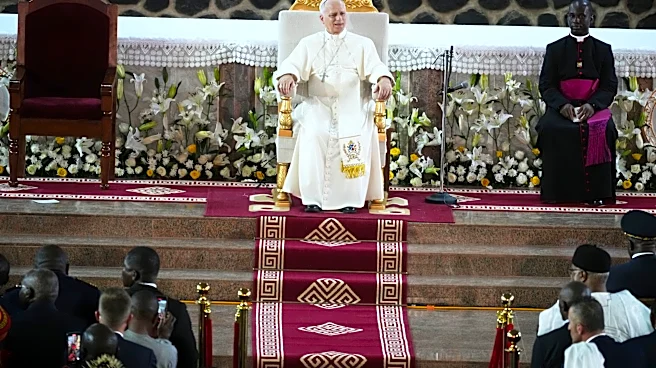
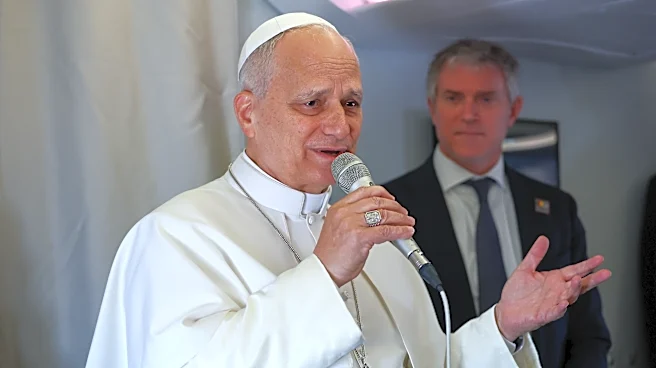
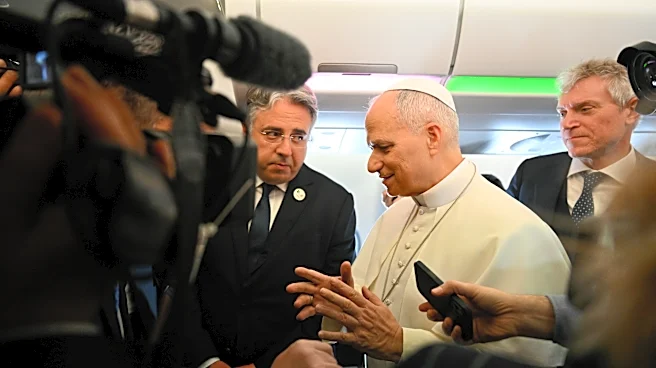
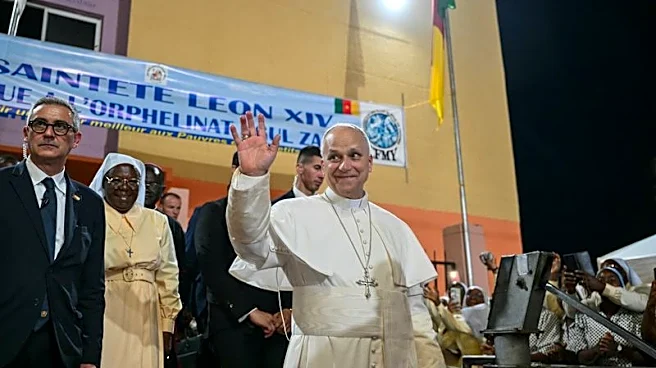
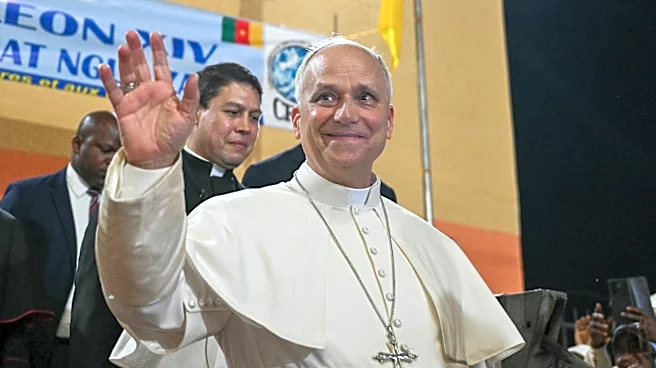
Pope Leo XIV has been named one of Time magazine's '100 Most Influential People of 2026'. This accolade highlights his impact as the first U.S.-born pope, joining a diverse group of leaders, innovators, and pioneers. Time's editor-in-chief, Sam Jacobs,
explained that the list is curated based on stories shaping the world, with input from editors, reporters, and global sources. Filmmaker Martin Scorsese contributed a reflection on Pope Leo, praising his bravery and common touch, and drawing parallels with Pope Francis. Scorsese noted Pope Leo's commitment to reforming the church to maintain its moral and spiritual force, emphasizing the importance of giving the laity a more active role in leadership and charity.
Why It's Important?
Pope Leo XIV's inclusion in Time's influential list underscores his significant role in shaping the future of the Catholic Church. As the first North American-born pope, his leadership marks a pivotal moment in the church's history, potentially influencing its direction amidst challenges such as sexual abuse scandals and financial misconduct. His approach to reform and emphasis on active lay participation could lead to a revitalization of the church's moral and spiritual credibility. This recognition also highlights the global influence of religious leaders in addressing contemporary issues and guiding spiritual and ethical discourse.
What's Next?
Pope Leo XIV's recognition may bolster his efforts to implement reforms within the Catholic Church. His focus on empowering the laity and promoting spiritual practices could lead to increased engagement and participation among church members. As the church navigates its crossroads, Pope Leo's leadership may inspire further dialogue and action towards addressing longstanding issues and fostering a more inclusive and active community. Observers will likely watch for his next steps in advancing these initiatives and how they resonate with the global Catholic community.
Beyond the Headlines
Pope Leo XIV's influence extends beyond religious circles, potentially impacting cultural and ethical discussions worldwide. His advocacy for reform and spiritual engagement may encourage broader societal reflections on leadership, morality, and community involvement. The recognition by Time magazine also highlights the intersection of religion and global influence, illustrating how spiritual leaders can shape public discourse and inspire change across diverse sectors. This development may prompt further exploration of the role of religious figures in addressing global challenges and fostering unity.