





What's Happening?
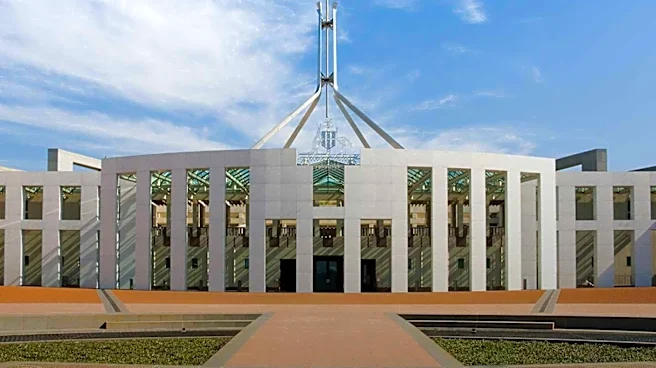
Australia is enacting significant changes to its migration policy, focusing on an 'offshore-first' approach and reducing pathways for onshore visa changes. New regulations, effective from November 28, 2026, will make the 'No Further Stay' condition (8503)
mandatory for all new visitor visa applications, including Visitor (600), ETA (601), and eVisitor (651) visas. This measure aims to prevent visitor visas from being used as a means to extend stays in Australia. Additionally, as of October 2, 2026, new student visa applications generally cannot include family members, with limited exceptions for specific passport holders and doctoral students. Onshore partner visas after a visitor entry will also be closed, directing couples to offshore pathways. The government's target for net overseas migration is 245,000 for 2026-27 and 225,000 for 2027-28, down from the current 292,000. These changes are being implemented through policy application rather than new laws, indicating a broader shift in immigration strategy.
Why It's Important?
These policy changes signify a fundamental shift in Australia's approach to immigration, prioritizing planned and controlled arrivals over opportunistic onshore transitions. The mandatory 'No Further Stay' condition for visitor visas will significantly impact individuals seeking to convert their visitor status to other visa categories, such as partner or student visas, while in Australia. This will likely lead to a decrease in onshore visa applications and an increase in offshore processing, potentially creating longer wait times and more complex application processes for those outside Australia. The restrictions on family members for student visas will particularly affect international students from South Asia, who previously accounted for a large proportion of dependent visas. This could alter the demographics of international student populations and impact the higher education sector. The overall goal of reducing net overseas migration suggests a move towards a more selective immigration system, which could have long-term implications for Australia's labor market, population growth, and cultural diversity.
What's Next?
Further measures are anticipated if the net overseas migration targets are not met, indicating a sustained commitment to tightening immigration controls. The government expects visitor visas to become easier to obtain for genuine tourists once the risk of overstaying is mitigated. Industries such as higher education, vocational education and training (VET), agriculture, horticulture, tourism, hospitality, and childcare are expected to be significantly affected. Universities may see a decline in coursework master's enrollments from markets with high dependent ratios, while PhD programs might experience growth. Employers sponsoring skilled workers will face increased scrutiny and shorter travel periods for Bridging Visa B (BVB) applications, impacting flexibility for overseas assignments and family emergencies. Migration and education agents will need to adapt to more complex advice requirements, increased offshore lodgements, and a higher risk of visa refusals. Individuals planning to migrate to Australia will need to meticulously plan their applications from outside the country, as onshore pathways become increasingly limited.
Beyond the Headlines
The shift towards an 'offshore-first' migration system raises broader questions about Australia's economic and social future. While the government aims to manage population growth and reduce pressure on infrastructure, these policies could lead to a decline in skilled labor availability in certain sectors, potentially impacting economic growth. The stricter rules for family members accompanying students and graduates could also have social implications, potentially deterring individuals from choosing Australia as a study or work destination if they cannot bring their families. The emphasis on policy application over new legislation suggests a more agile and less transparent approach to immigration reform, which could lead to uncertainty for prospective migrants and businesses. The long-term impact on Australia's reputation as a welcoming destination for international talent and families remains to be seen, as these changes could influence global perceptions and choices of migration destinations.