
What's Happening?
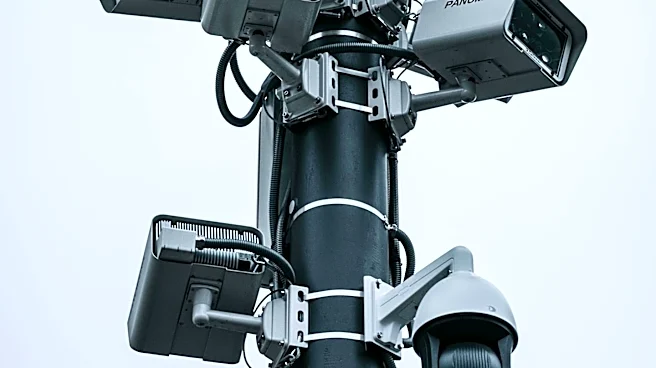
Senator Josh Hawley, Chairman of the Senate Judiciary Subcommittee on Crime, held a hearing to address the privacy and national security implications of the expanding network of AI-driven Flock cameras
across the U.S. The hearing followed his investigation into automated license plate reader companies. While CEOs of major surveillance technology companies like Flock, Axon, Motorola, and Verkada were invited, they declined to testify. Flock Safety, however, provided written responses to Senator Hawley, acknowledging the need for a federal framework to regulate these cameras and indicating that they have implemented some internal safeguards following public scrutiny. Senator Hawley expressed significant concerns about the network's ability to track individuals' movements extensively using AI, highlighting the case of Lindsey Isaacs, who was wrongly arrested due to inaccurate information from a Flock camera. This incident underscored the potential for false accusations and violations of Fourth Amendment rights, as law enforcement agencies can access this data without a warrant.
Why It's Important?
The proliferation of AI-driven surveillance networks, such as those operated by Flock Safety, presents significant challenges to individual privacy and civil liberties in the U.S. The ability of these cameras to record and store detailed information about vehicles and potentially individuals, accessible by law enforcement without a warrant, raises serious Fourth Amendment concerns regarding unreasonable searches and seizures. The case of Lindsey Isaacs illustrates the tangible risks of false accusations and wrongful arrests based on potentially inaccurate or misinterpreted data from these systems. This technology could lead to a 'guilty until proven innocent' scenario, where citizens are constantly monitored and logged without any reasonable suspicion. Furthermore, the potential for misuse of this vast data, such as tracking individuals for reasons beyond criminal investigations (e.g., abortion access or gun ownership), highlights the urgent need for clear federal regulations to prevent abuses and protect constitutional rights. The lack of transparency and accountability from the companies operating these networks further exacerbates these concerns, making it difficult for the public and policymakers to understand the full scope of their operations and impact.
What's Next?
The Senate Judiciary Subcommittee on Crime is expected to continue its examination of AI surveillance technologies and their impact on privacy and national security. Senator Hawley's ongoing investigation and the public hearing indicate a growing legislative interest in establishing a federal framework to regulate these camera networks. This could lead to proposed legislation aimed at setting clear guidelines for data collection, storage, access, and usage by law enforcement, potentially requiring warrants for accessing certain types of surveillance data. There may also be increased pressure on companies like Flock Safety to enhance transparency, implement stronger privacy protections, and improve the accuracy of their AI systems to prevent wrongful accusations. Civil liberties organizations, such as the ACLU, are likely to continue advocating for stricter regulations and public awareness campaigns regarding the privacy implications of these technologies. The debate will likely involve balancing public safety concerns with the protection of individual constitutional rights, potentially leading to a complex legislative process.
Beyond the Headlines
The widespread deployment of AI-driven camera networks like Flock Safety's points to a deeper societal shift towards pervasive surveillance, raising profound ethical and legal questions about the nature of privacy in the digital age. The technology's capacity to create a comprehensive, searchable database of citizens' movements without their consent or knowledge fundamentally alters the traditional understanding of public space and anonymity. This 'always-on' surveillance infrastructure could foster a chilling effect on free association and expression, as individuals may self-censor their activities knowing they are constantly being monitored. The potential for mission creep, where data collected for one purpose is later used for others, is a significant concern, especially given the ease with which such data can be cross-referenced and analyzed by AI. This development also highlights the tension between technological advancement and democratic values, challenging lawmakers to devise regulations that harness the benefits of AI for public safety while rigorously safeguarding fundamental rights against the risks of an omnipresent surveillance state.