



What's Happening?
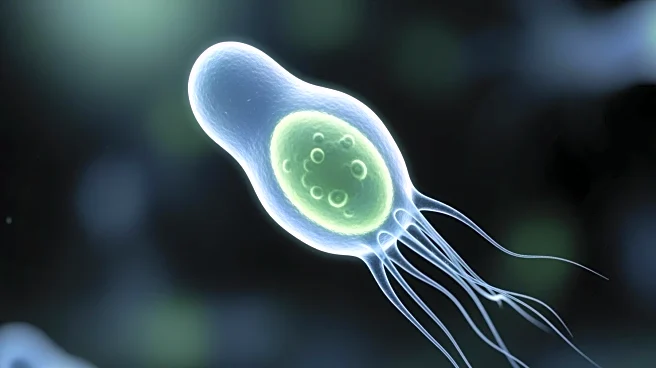
Environmental and public health researchers are raising alarms about the global spread of free-living amoebae, a group of pathogens that pose significant health risks. According to a perspective published in Biocontaminant, these microscopic organisms
are proliferating due to climate change, deteriorating water systems, and inadequate monitoring. While most amoebae are harmless, certain species, such as Naegleria fowleri, can cause severe and often fatal diseases. These amoebae can survive in extreme conditions, including high temperatures and strong disinfectants, and can even reside in water distribution systems. They also act as hosts for other pathogens, allowing bacteria and viruses to survive disinfection processes. The researchers emphasize the need for a coordinated One Health strategy, integrating public health, environmental research, and water management to mitigate these risks.
Why It's Important?
The spread of dangerous amoebae has significant implications for public health and safety. These organisms' ability to survive in harsh conditions and act as hosts for other pathogens poses a challenge to current water treatment and public health systems. The potential for these amoebae to spread into new regions due to rising global temperatures could lead to increased outbreaks and public health concerns. This situation underscores the need for improved surveillance, diagnostic tools, and water treatment technologies. The call for a One Health approach highlights the interconnectedness of environmental and health issues, emphasizing the need for integrated solutions to protect public health.
What's Next?
The researchers advocate for the implementation of a One Health strategy, which would involve collaboration between public health officials, environmental scientists, and water management experts. This approach aims to enhance surveillance and develop more effective diagnostic and treatment methods. As global temperatures continue to rise, the spread of heat-loving amoebae is expected to increase, necessitating proactive measures to prevent outbreaks. The development of advanced water treatment technologies and faster diagnostic tools will be crucial in reducing the risks associated with these pathogens.
Beyond the Headlines
The spread of amoebae highlights broader issues related to climate change and public health infrastructure. The ability of these organisms to thrive in changing environmental conditions points to the need for adaptive strategies in public health planning. Additionally, the role of amoebae as hosts for other pathogens raises concerns about antibiotic resistance and the effectiveness of current disinfection methods. Addressing these challenges will require a comprehensive understanding of the ecological and health dynamics at play, as well as a commitment to investing in research and infrastructure improvements.