





What's Happening?
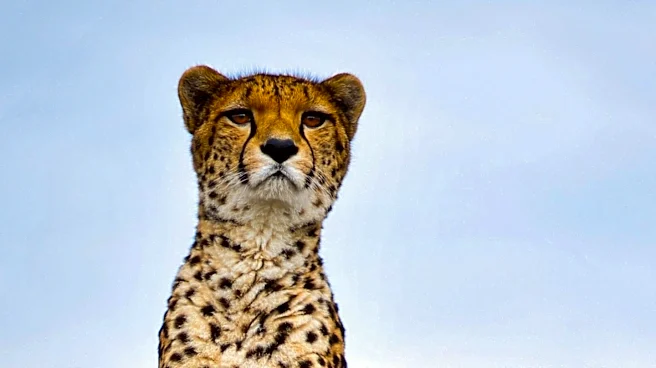
A new study led by researchers at the University of California, Santa Cruz, has reclassified the extinct predator known as the American 'cheetah' (Miracinonyx trumani). Contrary to previous assumptions, genomic analysis of ancient DNA from fossils indicates
that this animal was not a true cheetah but a highly adaptable relative of the modern puma. The research, published in Current Biology, shows that M. trumani had a much wider geographical range than previously thought, extending 20 degrees of latitude further north into the Arctic Yukon. While southern populations were generalist predators, northern populations specialized in consuming anadromous fish, such as salmon. The study also identified loss-of-function mutations in genes regulating circadian rhythms, suggesting adaptation to extreme light cycles in northern latitudes, and a unique sensory loss where the species lacked a functional gene for sour taste perception.
Why It's Important?
This reclassification significantly alters long-held theories in North American paleoecology, particularly the 'ghosts of predators past' hypothesis, which attributed the extreme speed of the American pronghorn to co-evolution with a cheetah-like predator. The new genomic data demonstrate that M. trumani's cheetah-like appearance was a result of evolutionary convergence, where unrelated species develop similar traits in similar environments, rather than a close evolutionary relationship. This understanding impacts how scientists interpret predator-prey dynamics and evolutionary pressures in Pleistocene North America. Furthermore, the discovery of specialized diets, such as fish consumption in Arctic populations, highlights the remarkable adaptability of ancient fauna and provides insights into ecological niches that allowed species to thrive in diverse environments. The findings also shed light on the genetic factors contributing to the species' extinction, noting a slow, long-term decline due to low genetic diversity rather than sudden bottlenecks.
What's Next?
The findings are expected to prompt a re-evaluation of existing paleontological records and ecological models concerning Pleistocene North America. Researchers may now focus on re-examining other extinct species that were classified based solely on morphological similarities, potentially leading to further reclassifications and a more accurate understanding of ancient biodiversity. Future studies could delve deeper into the specific genetic mechanisms that enabled M. trumani to adapt to diverse environments and specialized diets, particularly the loss of sour taste perception and circadian rhythm adaptations. This research also opens avenues for investigating the broader implications of low genetic diversity in long-term species survival, especially in the face of climate shifts, offering valuable lessons for modern conservation efforts.
Beyond the Headlines
The study underscores the critical role of advanced genomic analysis in refining our understanding of evolutionary history and correcting long-standing scientific misconceptions. The case of the American 'cheetah' serves as a powerful example of how superficial resemblances can be misleading in taxonomy and evolutionary biology, emphasizing the need for molecular evidence to complement morphological studies. The discovery of specialized fish-eating behavior in a large felid in the Arctic challenges conventional views of carnivore diets and ecological flexibility. Moreover, the insights into the species' slow decline due to low genetic diversity, rather than inbreeding, offer a nuanced perspective on extinction vulnerability. This highlights that even without immediate signs of genetic distress, a lack of diversity can render a species unable to adapt to long-term environmental changes, a crucial consideration for contemporary species facing climate change and habitat loss.