

What's Happening?
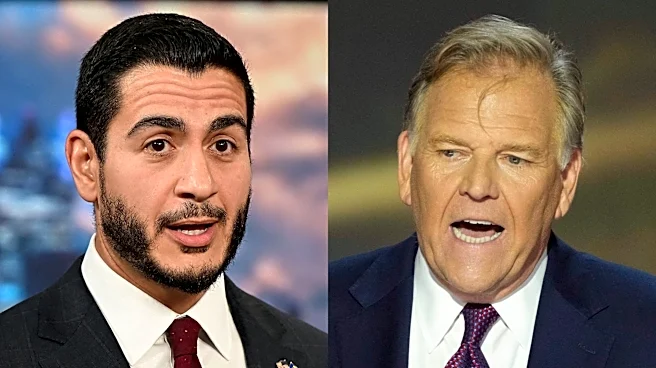
Seventeen prominent Michigan Jewish Democratic elected officials, party leaders, and activists have publicly joined the “Nonnegotiable Michigan” campaign, urging Democratic US Senate nominee Abdul El-Sayed to affirm foundational commitments regarding
Jewish safety, identity, and Israeli statehood. This move follows the campaign's initial launch by Michigan rabbis, cantors, and synagogue lay leaders three weeks prior, during which El-Sayed's campaign reportedly did not respond to requests from Jewish Democratic voters. The campaign centers on five core commitments: affirming that Jewish safety, including that of Zionist Jews, is nonnegotiable; recognizing the right of Jews to define their own identities; supporting Jewish sovereignty in Israel; welcoming the full participation of Jews in American political life; and providing an affirmative vision for a better future in the Middle East. Participants have expressed frustration over what they perceive as a lack of engagement from El-Sayed as Election Day approaches, citing past rhetoric that has caused concern within the community. A letter sent to former Vice President Kamala Harris by Nonnegotiable Michigan faith leaders detailed concerns, including El-Sayed's alleged past use of the term 'bloodthirsty' to describe Israelis, which they equate to historical anti-Jewish tropes.
Why It's Important?
This development is important as it highlights growing tensions and demands for clarity from a significant demographic within the Democratic Party in Michigan, a key swing state. The pressure on Abdul El-Sayed, a US Senate nominee, to address concerns about Jewish safety and Israeli sovereignty could influence voter turnout and support in the upcoming election. The campaign's emphasis on specific commitments, such as the nonnegotiable safety of Zionist Jews and support for Jewish sovereignty in Israel, reflects broader debates within the Democratic Party regarding its stance on Israel and antisemitism. El-Sayed's response, or lack thereof, could shape perceptions of his candidacy among Jewish voters and potentially impact the broader Democratic coalition in Michigan. The involvement of prominent elected officials and party leaders underscores the seriousness of these concerns and their potential to affect the political landscape, particularly in a state where electoral margins can be narrow. The campaign's framing as an 'invitation' rather than an 'ultimatum' suggests an attempt to engage, but the public nature of the appeal indicates a significant level of dissatisfaction.
What's Next?
The Nonnegotiable Michigan campaign is pressing Abdul El-Sayed to state plainly whether the safety of Zionist Jews is nonnegotiable and whether he aspires to dismantle Jewish sovereignty and self-governance in the State of Israel. They are also urging him to publicly reject rhetoric that stigmatizes or incites violence against Jewish Michiganders, invokes anti-Jewish tropes, casts Jewish political participation as nefarious, or scapegoats Israel and Jews for suffering. El-Sayed's election campaign team has not yet responded to requests for comment. His future actions and statements regarding these issues will be closely watched by the campaign organizers, Jewish voters, and the broader Michigan electorate. His response could determine whether he gains or loses support from this segment of the Democratic base, potentially influencing the outcome of the US Senate race. The campaign's continued public pressure suggests that this issue will remain a significant factor in the lead-up to Election Day, with potential for further public statements or actions from both sides.
Beyond the Headlines
The campaign against Abdul El-Sayed delves into deeper implications concerning the evolving relationship between progressive politics and the Jewish community, particularly regarding Israel. The demand for candidates to explicitly affirm the safety of 'Zionist Jews' and support 'Jewish sovereignty in Israel' reflects a growing concern among some Jewish voters about the perceived rise of anti-Zionism within certain progressive circles, which they view as intersecting with antisemitism. This situation highlights the challenge for Democratic candidates to navigate complex geopolitical issues while maintaining broad coalition support. The use of terms like 'blood libel' in reference to El-Sayed's past comments underscores the historical sensitivities and deep-seated fears within the Jewish community. This dynamic could lead to a re-evaluation of how political discourse around Israel and Jewish identity is conducted within the Democratic Party, potentially influencing future candidate vetting and platform development. It also raises questions about the role of identity politics in shaping electoral outcomes and the increasing pressure on candidates to take clear stances on issues that resonate deeply with specific ethnic and religious groups.