



What's Happening?
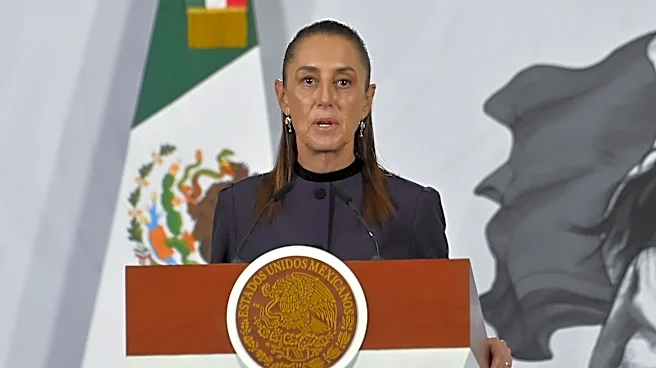
President Claudia Sheinbaum Pardo has confirmed that Grupo México has not formally signed an agreement to contribute 1.5 billion pesos for the repair of environmental and health damages caused by the 2014 Sonora River contamination. This acknowledgment
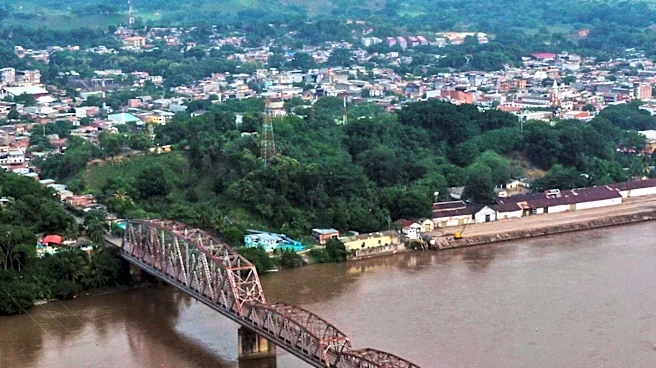
contrasts with previous government announcements that suggested a written commitment from the mining company. Despite the lack of a signed document, President Sheinbaum maintained that the committed funds are being utilized for remediation efforts and assistance to communities affected by the toxic spill. She stated that the funds are designated for projects such as building a hospital, cleaning the river, establishing a toxicology clinic, and constructing several water-treatment plants. The President offered to have officials responsible for the remediation efforts provide updates and explain the use of these funds.
Why It's Important?
This situation highlights a significant transparency and accountability issue regarding environmental remediation efforts in Mexico. The absence of a signed agreement with Grupo México, despite the substantial funds involved and the severe impact of the 2014 spill, raises concerns about the enforceability of commitments and the oversight of environmental justice initiatives. The Sonora River contamination has had long-lasting health and environmental consequences for affected communities, making the proper allocation and management of remediation funds critical. The President's acknowledgment, while clarifying the status of the agreement, also puts pressure on her administration to demonstrate how the funds are being used and to ensure that Grupo México fulfills its responsibilities, even without a formal signed document. This issue underscores the challenges in holding corporations accountable for environmental disasters and ensuring justice for affected populations.
What's Next?
President Sheinbaum has offered to bring officials involved in the Sonora River remediation efforts to a news conference to present updates and explain how the 1.5 billion pesos are being utilized. This move aims to increase transparency and address public and media concerns about the unsigned agreement. The focus will now be on the actual implementation of the projects—the hospital, toxicology clinic, river cleanup, and water-treatment plants—and the tangible benefits they bring to the affected communities. Stakeholders, including environmental groups, local residents, and opposition parties, will likely monitor these developments closely, demanding clear evidence of progress and accountability for the funds. The situation could also prompt further discussions on legal frameworks for corporate environmental responsibility and the enforcement of remediation agreements in Mexico.
Beyond the Headlines
This case delves into the broader themes of corporate social responsibility, environmental justice, and the role of government in mediating between industrial interests and community well-being. The 2014 Sonora River spill was one of Mexico's worst environmental disasters, and the ongoing challenges in securing and verifying remediation efforts reflect systemic issues in environmental governance. The lack of a signed agreement, despite verbal commitments, highlights potential weaknesses in legal and regulatory mechanisms for environmental protection. This situation could trigger a re-evaluation of how environmental liabilities are managed and how affected communities are compensated and supported. It also raises ethical questions about corporate accountability and the political will to enforce environmental regulations, potentially influencing future policy decisions on mining and environmental protection in Mexico.