







What's Happening?
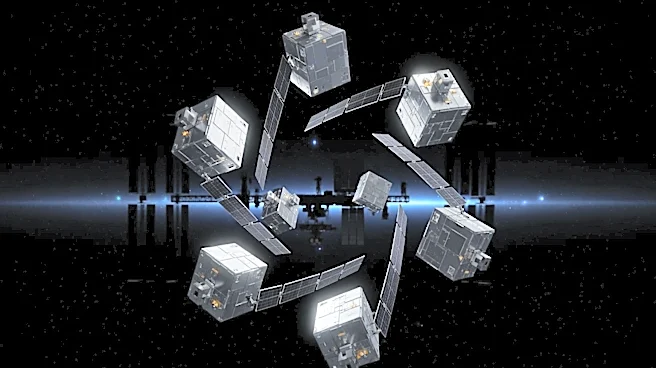
NASA has successfully launched six CubeSats to the International Space Station (ISS) as part of its Northrop Grumman Commercial Resupply Services 24 mission. The CubeSats, which are small satellites, were developed by U.S. educational institutions and
non-profit organizations under NASA's CubeSat Launch Initiative (CSLI). The launch, which took place on April 11, included CubeSats named Coconut, Harvard Undergraduate CubeSat (HUCSat), Low Earth Orbit Platform for Aerospace Research and Development Satellite 1 (LEOPARDSat-1), and three Pleiades Rapid Orbital Verification Experiment System (PROVES) CubeSats. These CubeSats will be deployed from the ISS to conduct various experiments. The mission is part of the Educational Launch of Nanosatellites (ELaNa) 58 launch grouping, managed by NASA’s Launch Services Program at Kennedy Space Center.
Why It's Important?
The launch of these CubeSats is significant as it provides educational institutions with the opportunity to conduct space-based research, fostering innovation and learning in the field of aerospace. By enabling students and researchers to design and operate their own satellites, NASA is promoting STEM education and inspiring the next generation of scientists and engineers. Additionally, the data collected from these CubeSats can contribute to scientific knowledge and technological advancements, potentially leading to new discoveries and applications in space exploration and other fields.