



What's Happening?
Iran has demanded immunity for its regional proxies, including Hezbollah and the Houthis, as part of ongoing diplomatic efforts to resolve tensions in the Middle East. Saudi Arabia, on the other hand, is pushing for 'ironclad guarantees' that any agreement
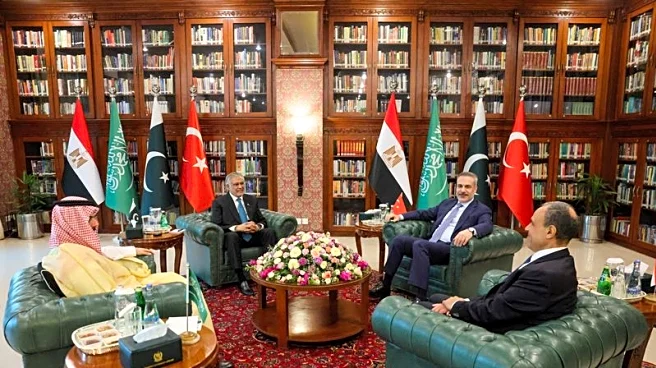
must include restrictions on Iran's missile capabilities and its support for terrorist groups. The talks, which involve foreign ministers from Pakistan, Saudi Arabia, Turkey, and Egypt, are focused on reopening the Strait of Hormuz, a critical waterway for global oil and gas supply. Iran has effectively choked the strait during the conflict, and the United States has threatened to strike Iranian energy infrastructure if Tehran does not comply with reopening it. The deadline for negotiations, set by President Trump, is approaching, with no signs of compromise from Tehran.
Why It's Important?
The situation in the Middle East has significant implications for global oil markets and regional stability. The Strait of Hormuz is a vital passage for about one-fifth of the world's oil and gas supply, and its closure has already impacted global energy prices. The demands from Iran and Saudi Arabia highlight the deep-seated geopolitical tensions that could lead to further conflict if not resolved. The involvement of multiple countries in mediation efforts underscores the complexity of the situation and the potential for broader regional implications. The U.S. ultimatum adds pressure to the negotiations, with potential military action looming if diplomatic efforts fail.
What's Next?
As the deadline set by President Trump approaches, the likelihood of reaching a ceasefire remains low due to the stark disagreements between Iran and Saudi Arabia. Iran's refusal to negotiate its missile program and its demand for immunity for proxies are major sticking points. If the Strait of Hormuz is not reopened, the U.S. may proceed with military action, which could escalate the conflict further. The diplomatic efforts will continue, with Pakistan playing a key role as an intermediary, but the prospects for a resolution remain uncertain.
Beyond the Headlines
The ongoing conflict and negotiations have broader implications for international relations and regional power dynamics. Iran's insistence on charging transit fees through the Strait of Hormuz could alter the economic landscape of the region, potentially increasing costs for global shipping and impacting oil prices. The involvement of countries like Turkey and Egypt in the talks suggests a shift towards regional cooperation, which could redefine alliances and influence future diplomatic strategies. The situation also raises ethical questions about the use of military force and the protection of civilian populations in conflict zones.