

What's Happening?
Norway has announced a significant financial commitment of 85 billion Norwegian crowns (approximately $9.2 billion USD) in aid to Ukraine for the 2027 fiscal year. This pledge matches the amount provided in 2026 and is intended for both military and humanitarian
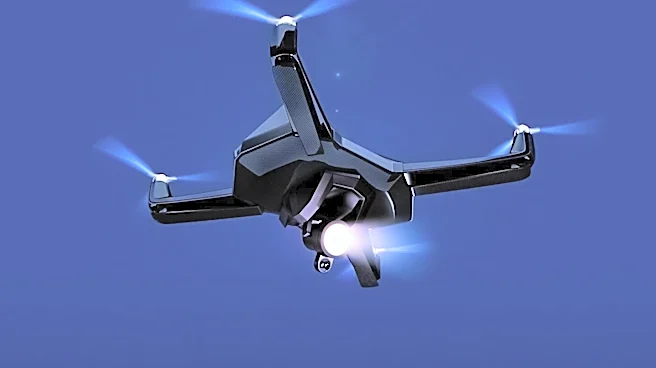
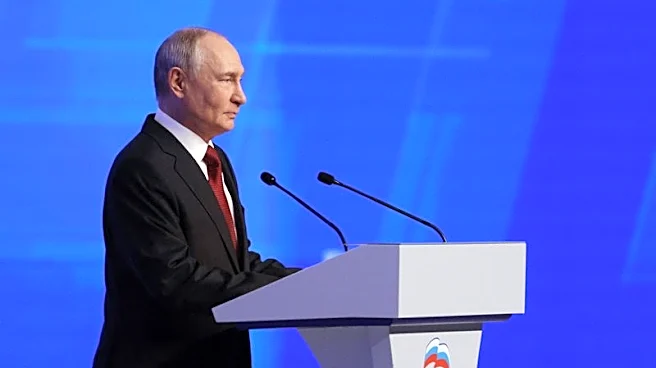
spending. Prime Minister Jonas Gahr Stoere made the announcement during a visit to Kyiv, accompanied by other Nordic and Baltic leaders, as a demonstration of solidarity with Ukraine amidst its ongoing conflict. Stoere emphasized that this support is not merely assistance but an investment in Europe's security. The commitment comes as both Russia and Ukraine intensify drone campaigns targeting each other's economic infrastructure, extending beyond the frontlines of the war, which is nearing its four-and-a-half-year mark. Russian President Vladimir Putin has indicated that Moscow will retaliate against Ukraine's strikes on Russian economic targets.
Why It's Important?
This substantial financial commitment from Norway underscores the continued international support for Ukraine and highlights the perception among European nations that Ukraine's security is intrinsically linked to broader European stability. For the U.S., this action by a NATO ally reinforces the collective defense posture against Russian aggression and demonstrates a shared commitment to upholding international norms. The aid package, covering both military and humanitarian needs, will directly impact Ukraine's ability to defend itself and provide essential services to its population, thereby influencing the trajectory of the conflict. The statement from Prime Minister Stoere about the aid being an 'investment in Europe's own security' reflects a strategic understanding that preventing further destabilization in Eastern Europe is crucial for the entire continent. This also signals to Russia that international resolve to support Ukraine remains strong, potentially influencing Moscow's strategic calculations regarding the conflict's duration and intensity.
What's Next?
The pledged funds are slated for the 2027 fiscal year, indicating a long-term commitment from Norway to Ukraine's defense and recovery. This sustained support will likely enable Ukraine to plan for future military operations and reconstruction efforts with greater certainty. The ongoing drone campaigns by both Russia and Ukraine suggest a continued escalation in targeting economic infrastructure, which could lead to further retaliatory actions and a prolonged conflict. The international community, including the U.S., will likely monitor the effectiveness of such aid and its impact on the ground. Further discussions among NATO and European Union members regarding coordinated support strategies for Ukraine are also probable, especially as the conflict evolves and new challenges emerge. The financial commitment may also encourage other nations to maintain or increase their own aid packages, fostering a broader, sustained international effort.
Beyond the Headlines
Norway's decision to frame its aid as an 'investment in Europe's own security' reflects a deeper understanding of interconnected geopolitical destinies. This perspective moves beyond traditional humanitarian or military assistance, suggesting a strategic re-evaluation of national security in the face of regional conflicts. It highlights a growing trend among European nations to take more direct responsibility for continental security, potentially influencing future defense policies and alliances. The emphasis on both military and humanitarian aid also points to a comprehensive approach to conflict resolution, acknowledging that long-term stability requires addressing both immediate threats and the societal impacts of war. This could set a precedent for how other nations approach international crises, fostering a more integrated and proactive stance on global security challenges. The ongoing conflict also raises ethical questions about the targeting of economic infrastructure and its long-term consequences for civilian populations and international law.