




What's Happening?
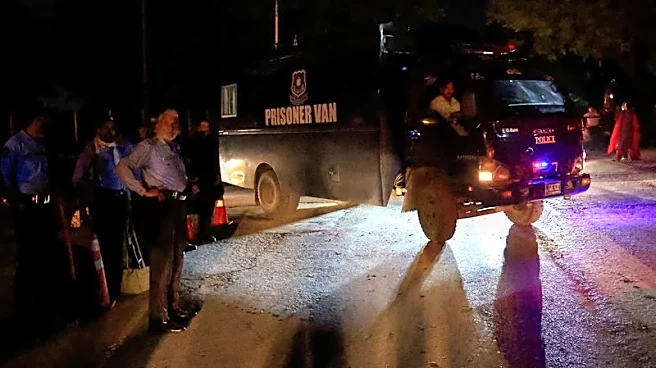
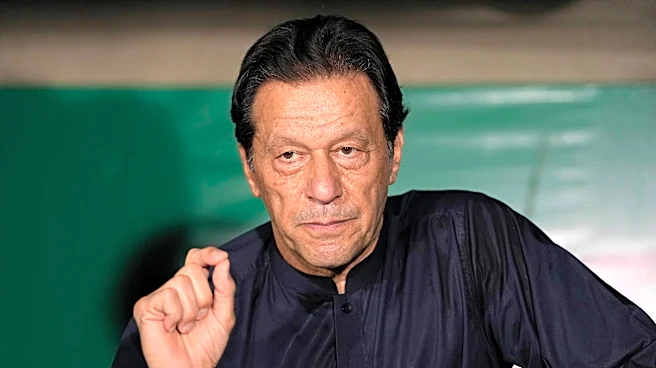
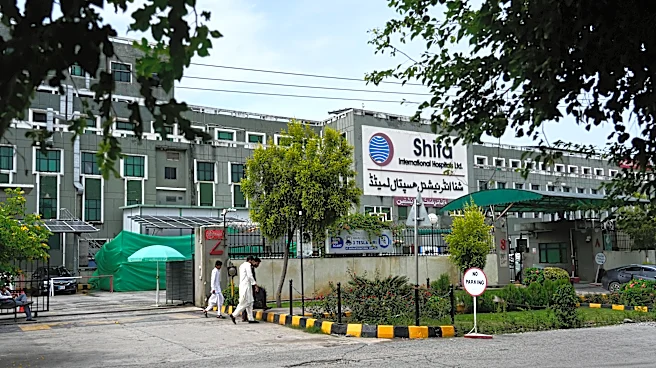
Former Pakistani Prime Minister Imran Khan was transferred back to prison early Friday after undergoing a medical examination at a hospital in Islamabad. Doctors at the hospital declared him "medically fit." The Supreme Court had previously ordered Khan to be
taken to a specific private hospital within 48 hours for examination, following concerns about his health. However, he was ultimately taken to a government-run hospital, the Pakistan Institute of Medical Sciences (PIMS). Information Minister Attaullah Tarar confirmed that Khan was seen by a team of qualified doctors, including an ophthalmologist, a cardiologist, and a physician. This intervention marked the most significant relief Khan has received from the courts since his imprisonment in 2023 on corruption charges, which he claims are politically motivated. The court order also stipulated that Khan should be allowed to see his family, a right he had been denied for months. His sister, Dr. Uzma Khan, accompanied him during the hospital visit.
Why It's Important?
This event highlights the ongoing political tensions and legal challenges surrounding former Prime Minister Imran Khan in Pakistan. The Supreme Court's intervention to ensure his medical examination underscores the judiciary's role in safeguarding the rights of detainees, even those facing serious charges. The discrepancy between the court's order to send him to a private hospital and his eventual transfer to a government facility, coupled with the security measures and decoy tactics, suggests a complex interplay of political maneuvering and security concerns. This situation could further fuel public debate about the fairness of the legal proceedings against Khan and the transparency of government actions. For his supporters, the incident may reinforce perceptions of political persecution, potentially leading to increased unrest or calls for greater accountability. The health and treatment of high-profile political figures often become symbolic of broader issues concerning human rights and due process within a nation's justice system.
What's Next?
Following his return to jail, the legal proceedings against Imran Khan are expected to continue. His legal team will likely continue to challenge the corruption charges, which Khan maintains are politically motivated. The manner of his hospital transfer and the perceived deviation from the Supreme Court's order could become a point of contention in future legal arguments or public discourse. Political reactions from his party, the PTI, and opposition groups will be closely watched, as will any further statements from government officials regarding his health and detention conditions. The situation could also influence public sentiment ahead of any future elections or political events in Pakistan. International observers and human rights organizations may also continue to monitor his case, given his prominence and the nature of the allegations against him. The focus will remain on the judicial process and whether it adheres to principles of fairness and transparency.
Beyond the Headlines
The handling of Imran Khan's medical examination and subsequent return to jail touches upon deeper issues of judicial independence, political power dynamics, and the rule of law in Pakistan. The court's directive for a specific hospital and the government's decision to use a different one, citing security concerns, illustrate the delicate balance between judicial authority and executive action. This incident could set precedents for how high-profile political prisoners are treated and how court orders are implemented in sensitive political contexts. It also raises questions about the public's trust in institutions, particularly when there are perceived inconsistencies in the application of justice. The ongoing narrative of political motivation behind the charges against Khan, combined with concerns about his health and treatment, contributes to a broader discussion about democratic norms and the protection of civil liberties in Pakistan. The long-term implications could include a re-evaluation of judicial oversight mechanisms and the transparency of the penal system.