





What's Happening?
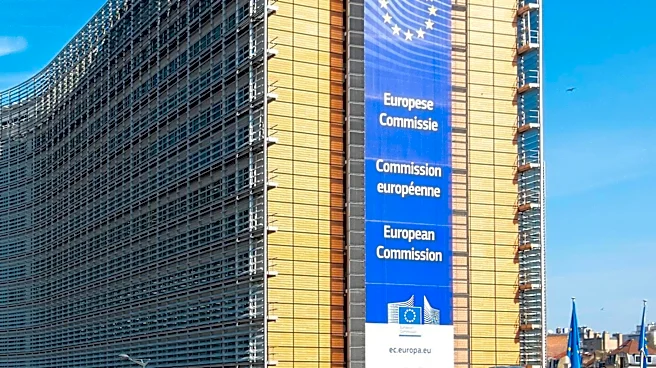
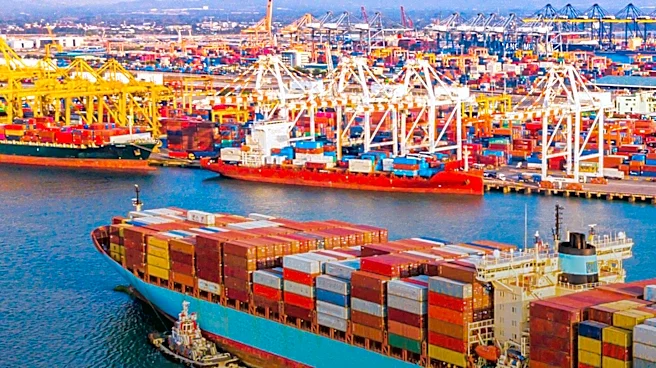
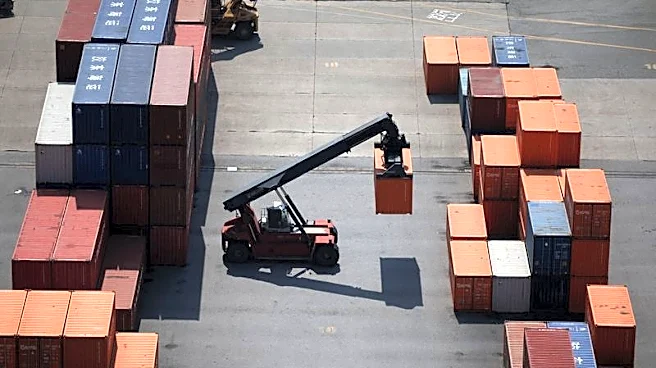
The European Union (EU) has announced a significant reduction in its duty-free steel import quotas, cutting them by 47% to 18.3 million metric tons annually. This move is part of a broader strategy to protect the EU's steel industry from global overcapacity
and dumping practices. The new rules, effective immediately, introduce a 50% duty on steel imports exceeding the quota. The EU has also negotiated specific terms with countries having free trade agreements (FTAs), allowing them to maintain a higher level of market access compared to the average reduction. The European Commission aims to increase steel capacity utilization within the EU to 80%, although industry experts suggest a more modest increase to 73%-75% is likely. The changes are expected to help EU steelmakers recover some of the production lost in recent years.
Why It's Important?
The EU's decision to slash steel import quotas is a strategic move to bolster its domestic steel industry, which has been struggling with overcapacity and competition from cheaper imports, particularly from China. By imposing these quotas, the EU aims to restore fair competition and protect its market from distortions caused by global overcapacity. This policy shift could have significant implications for international trade, affecting countries that rely on exporting steel to the EU. It may also prompt other regions to adopt similar protective measures, potentially leading to a more fragmented global steel market. The decision underscores the EU's commitment to safeguarding its industries while navigating complex trade relationships.
What's Next?
As the new quotas take effect, the EU will monitor their impact on the steel industry and adjust allocations if necessary to address supply shortages. The EU's approach may influence other regions to reconsider their trade policies, potentially leading to negotiations or disputes over market access. The EU and its trade partners will likely engage in discussions to ensure compliance and address any emerging challenges. Additionally, the EU may explore extending protective measures to downstream sectors, such as automotive and construction, to further stabilize its steel industry.